
But Better!
- Genre: Wave Based Survival SHooter
- Type: Gameplay Prototype
- Engine: Unreal Engine 4
- Tools: But Better! Template
- Iterations # 3
- Playtests # 3
- Role: Gameplay / Level Designer
Goal
Week 1 – Prototype 1 (FPS)
Our team set out to prototype a wave based survival shooter inspired by Call of Duty: Zombies and Doom Eternal. My personal goal was to design mechanics and encounters that supported progression through a short linear level while showcasing the systems our team implemented.
Within this week, I pushed myself to grow in:
- Creating purchasable doors, room based spawners, and a dash ability.
- Building a playable level that highlighted the mechanics developed by the team.
- Introducing pickups, locked doors, and enemy spawns in a way that guided players naturally.
- Balancing scope and clarity under a strict one week deadline.
This was my first time building mechanics directly tied to player variables like points and resources. Even within limited time, I learned how to align my level with the team’s systems and keep player progression clear.
- Build grid placement, wave manager, and purchasing system.
- Design barricade for blocking, turret for sustained fire, damage node for bullet amplification.
- Support my teammates’ enemy designs with mechanics that scaled alongside escalating waves.
- Take ownership of multiple interconnected systems that formed the backbone of the prototype.
Week 3 – Feedback & Polish
In the final week, our team’s goal was to refine Prototype 2 by adding player feedback indicators (PFIs) that made mechanics clearer and more satisfying. My personal goal was to ensure that the systems I had implemented communicated their function intuitively and rewarded player interaction.
I focused on:
- Adding screen shake, explosions, and sound cues to reinforce impact.
- Designing pulsing double damage bullets and slow motion purchasing moments for dramatic emphasis.
- Implementing hotkey images and item costs to guide players effectively.
- Helping integrate my systems with teammates’ mechanics and presentation.
This phase taught me the value of player feedback as an equal partner to mechanics and level design. By working with the team to enhance clarity and responsiveness, we elevated the prototype into something both functional and fun to play.
Prototype 1
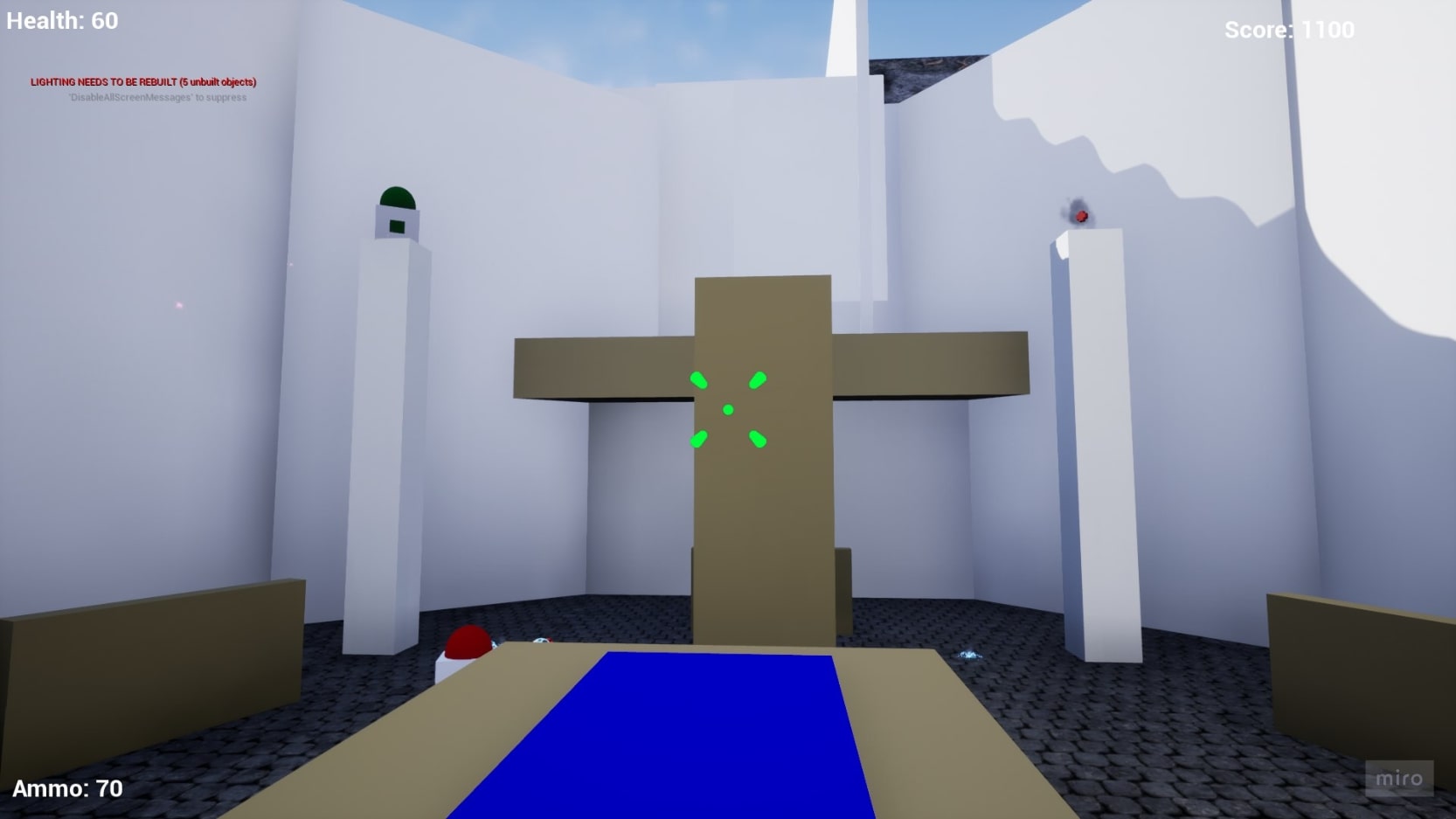
Prototype 1 Level
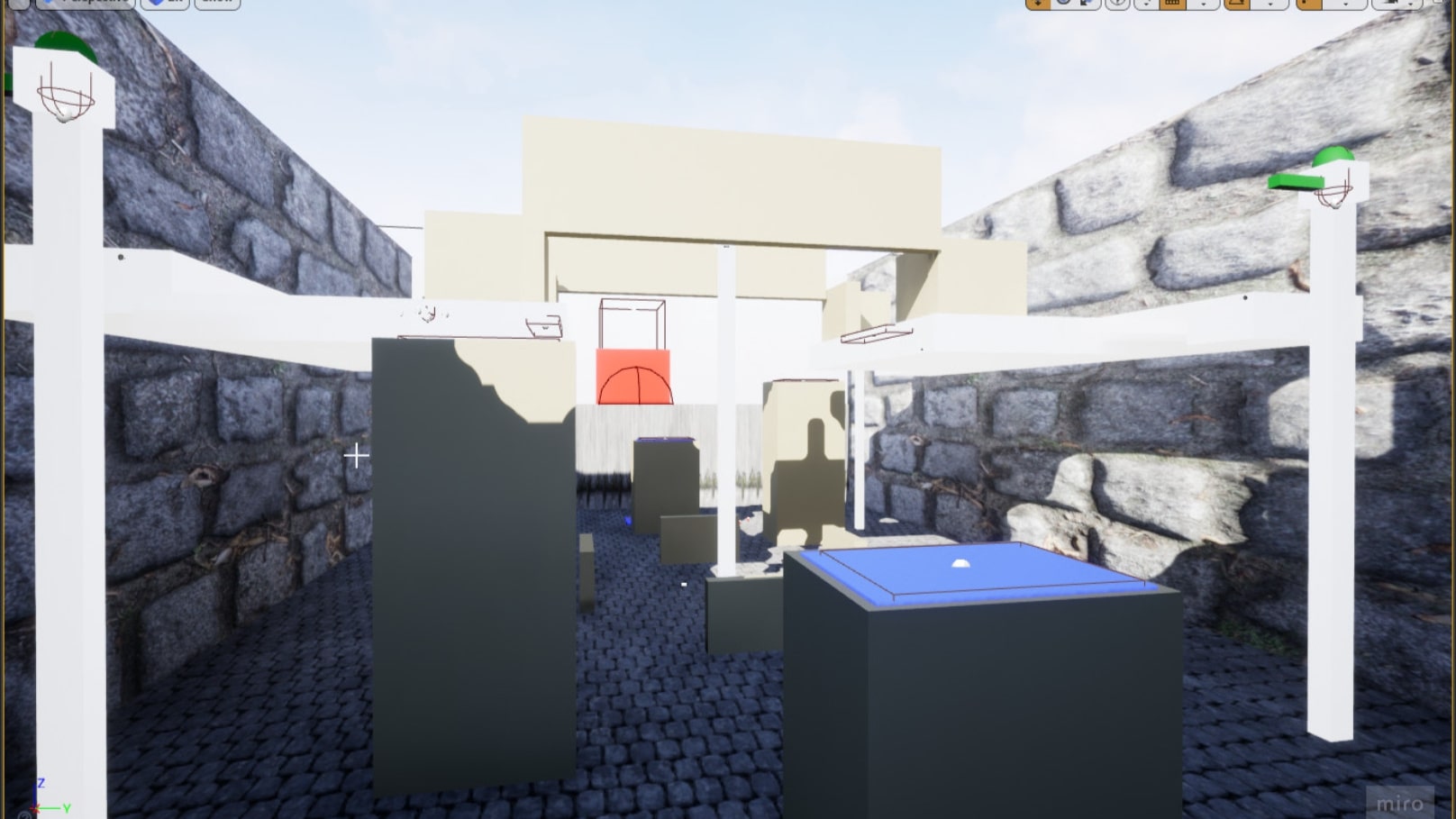
Technique & Use-case:
Structured rooms to introduce mechanics progressively, ensuring players learned each system before advancing.
Context of use-case:
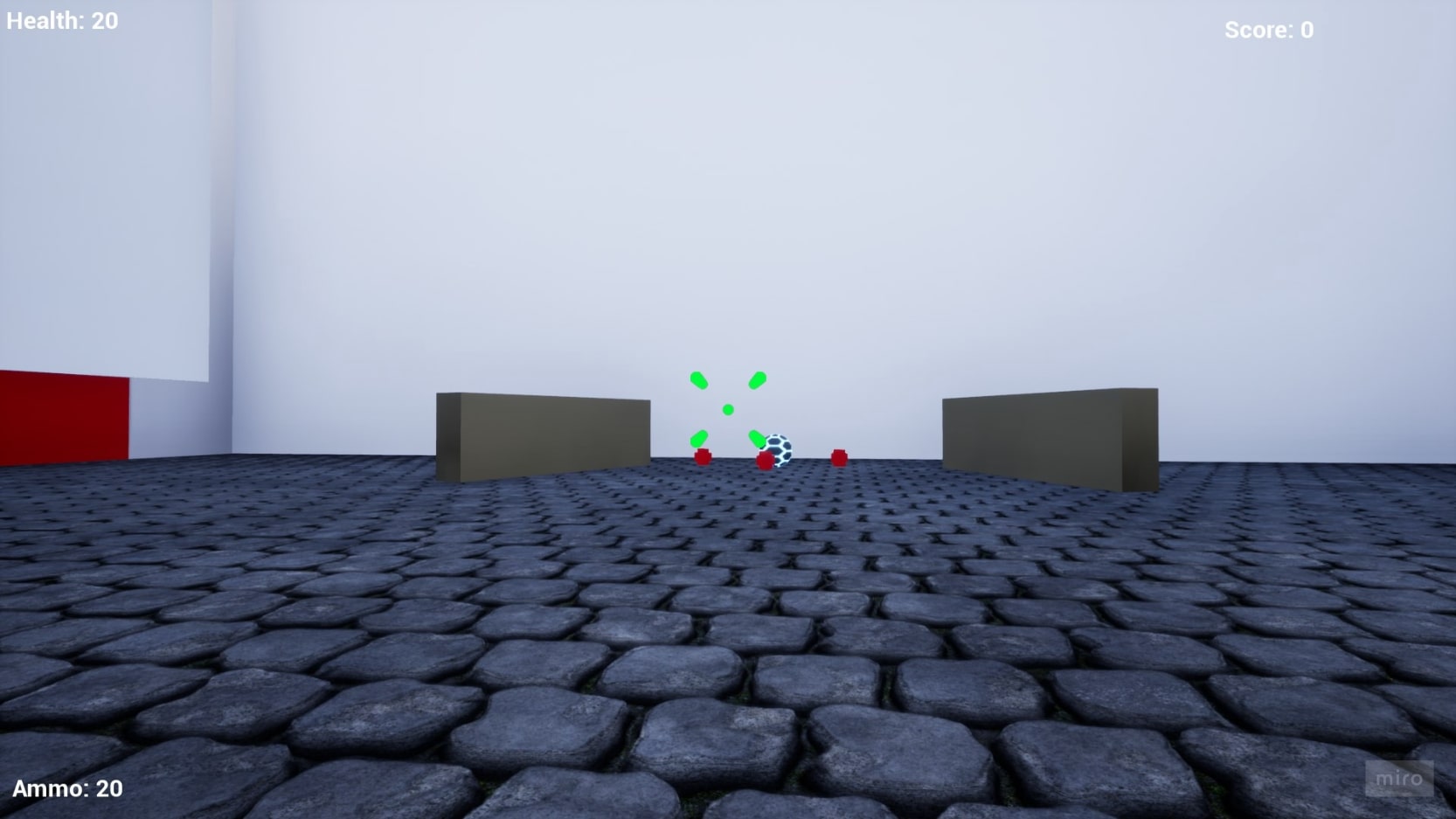
Each area was designed as a teaching space from pickups at spawn, to locked doors requiring points, to vertical arenas that demanded use of mobility and combat skills.
Technique Detail:
- Pickups in the starting area to draw players forward
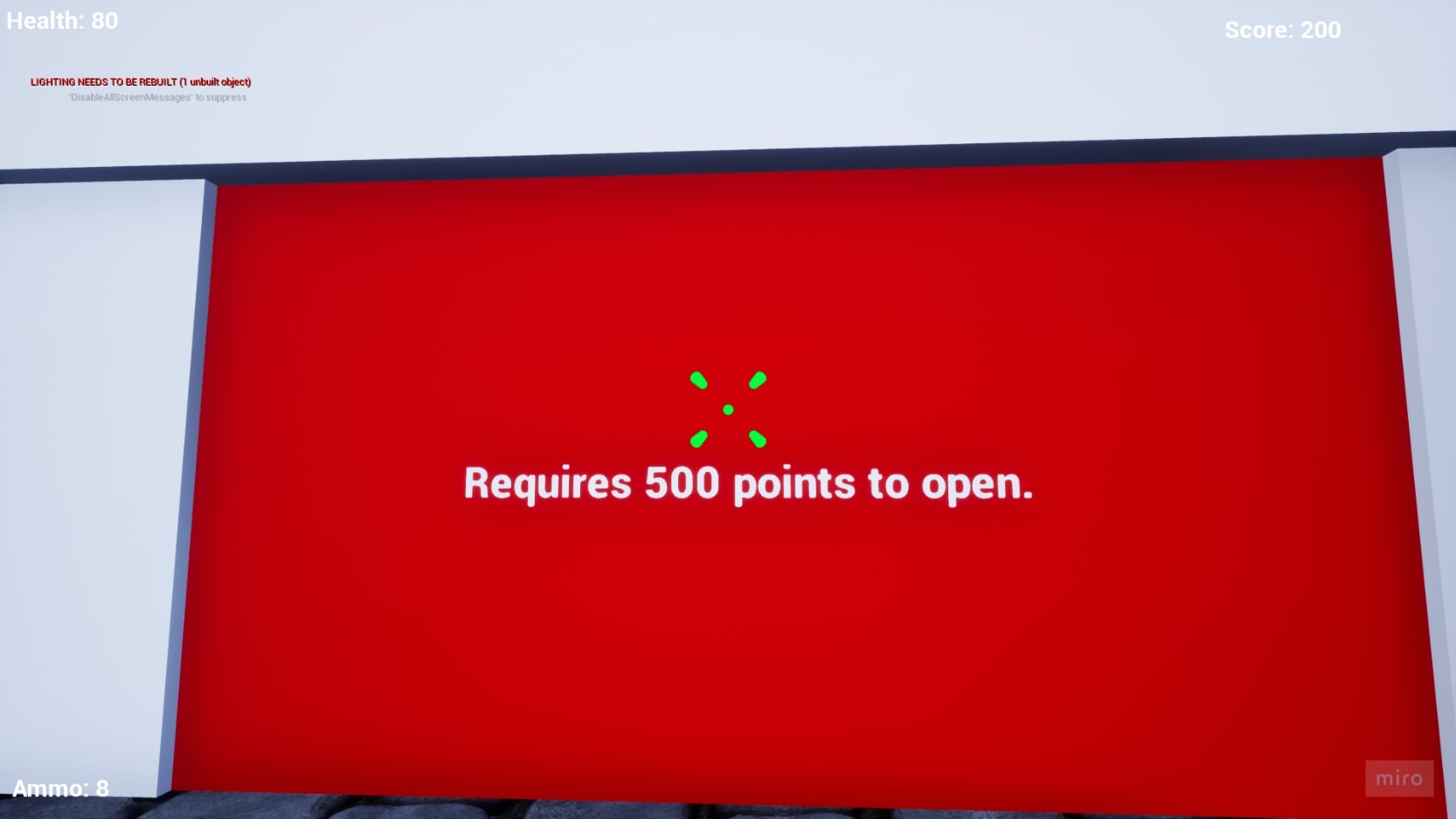
- Locked red door reinforcing point based progression
- Vertical arena introducing new enemies and mobility challenges
- Final capstone room requiring mastery of all mechanics
Purchasable Doors
Technique & Use-case:
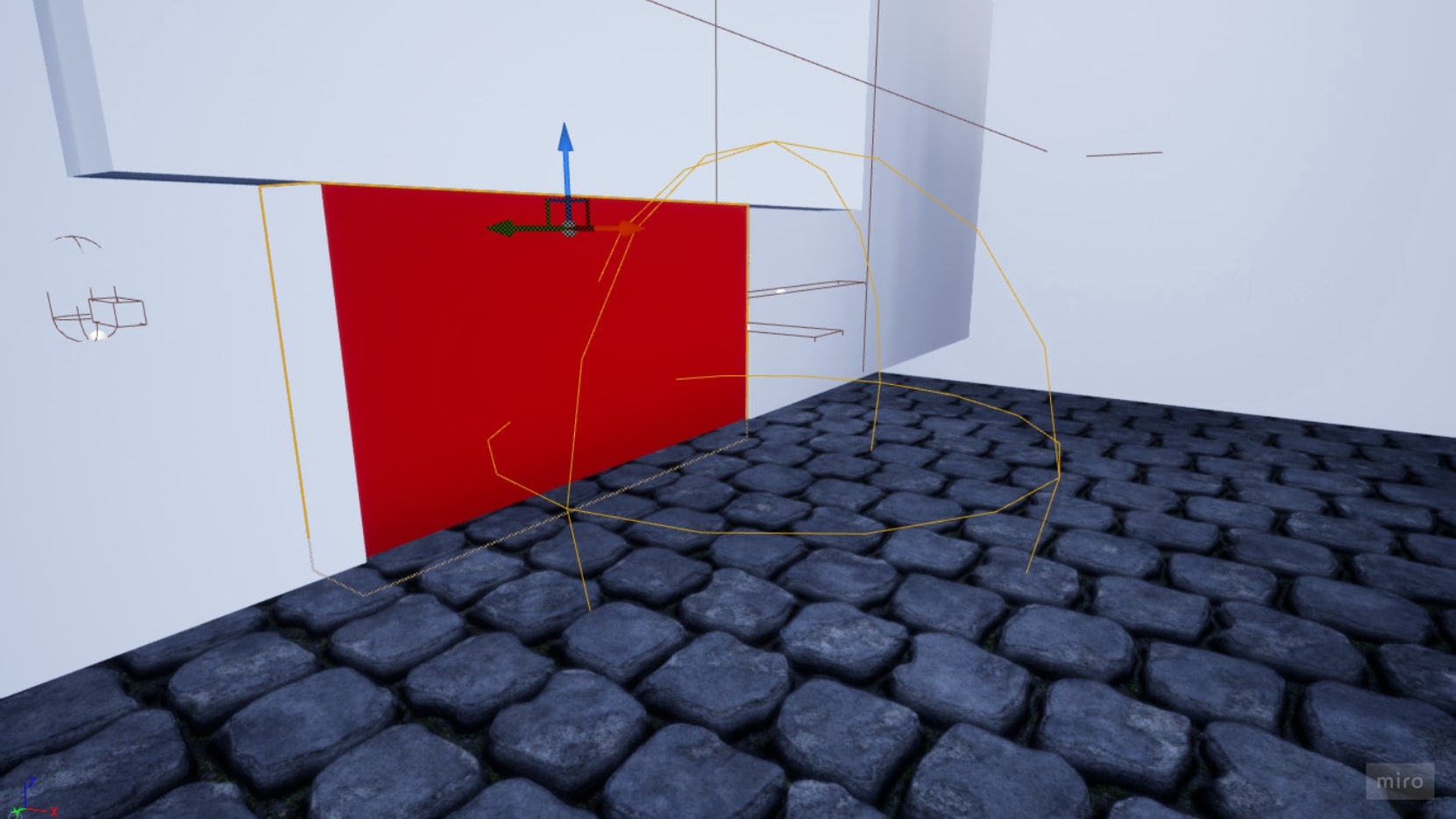
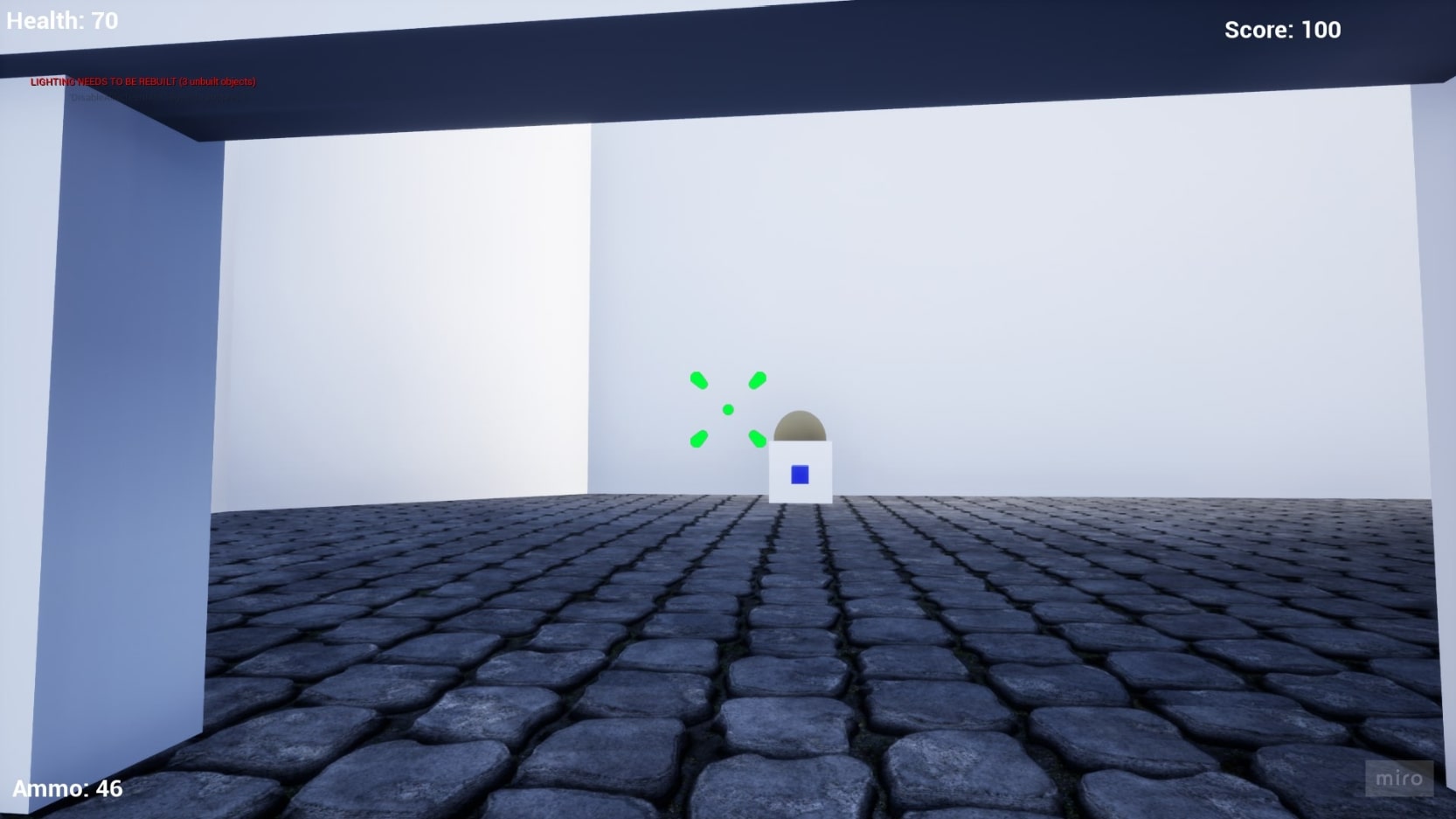
Designed purchasable doors to gate progression and tie combat success directly to resource management.
Context of use-case:
Players earned points from defeating enemies, then spent those points to unlock new areas. This created a loop of combat, reward, and advancement that reinforced progression pacing.
Technique Detail:
- Doors displayed their cost when approached
- Points were deducted on interaction, opening the path forward
- Early placement taught the system quickly, with later doors requiring higher investment
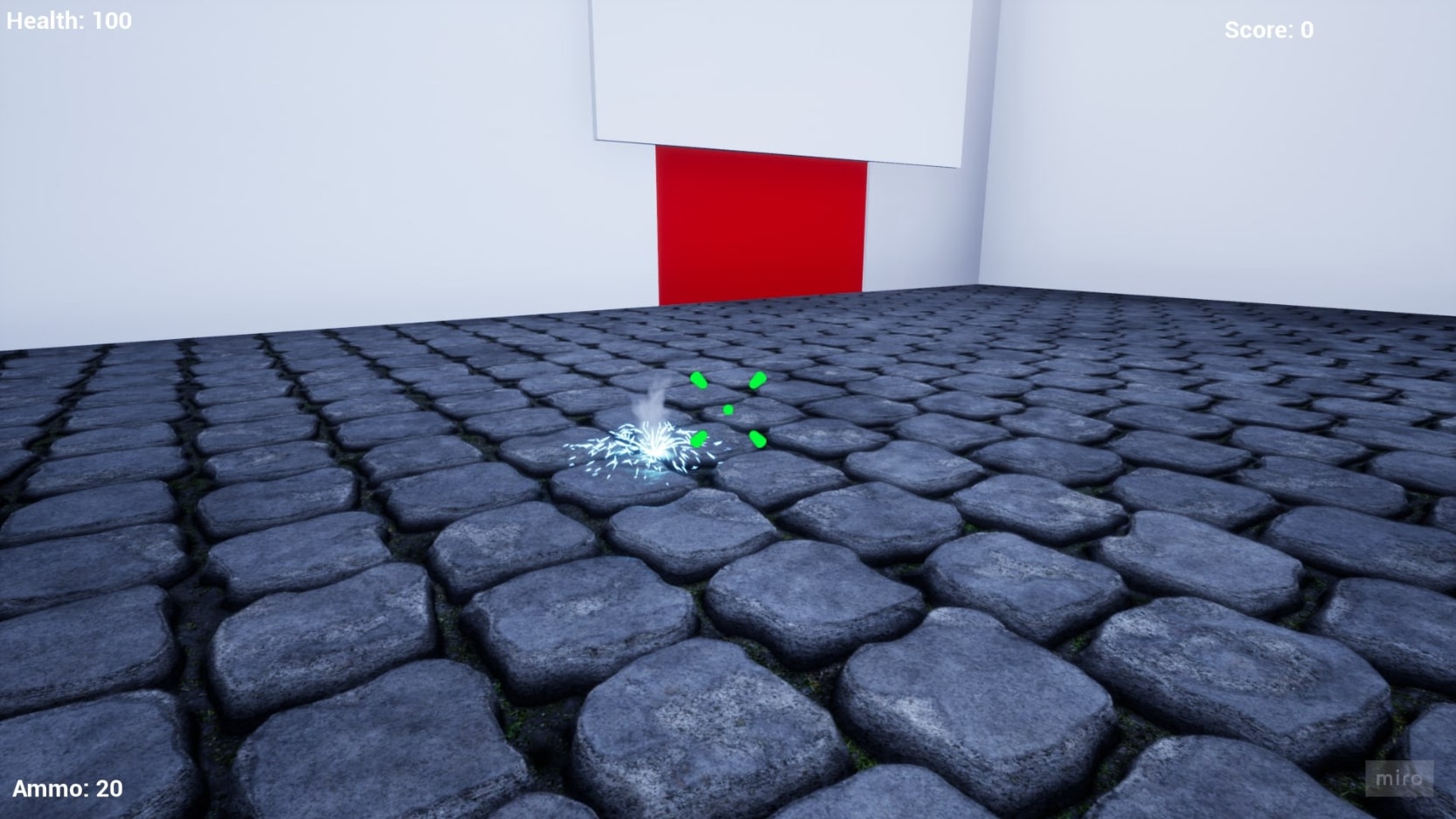
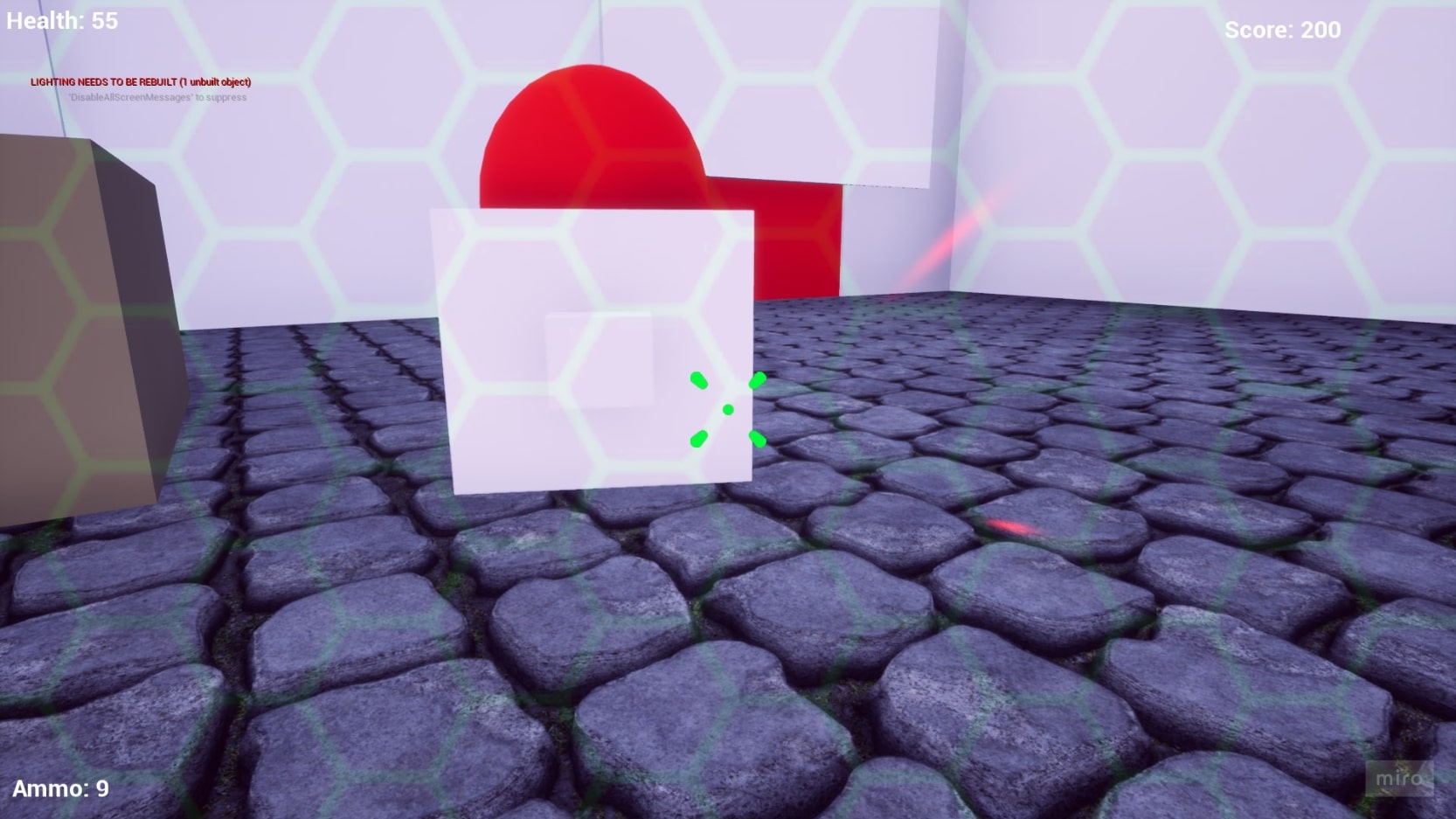
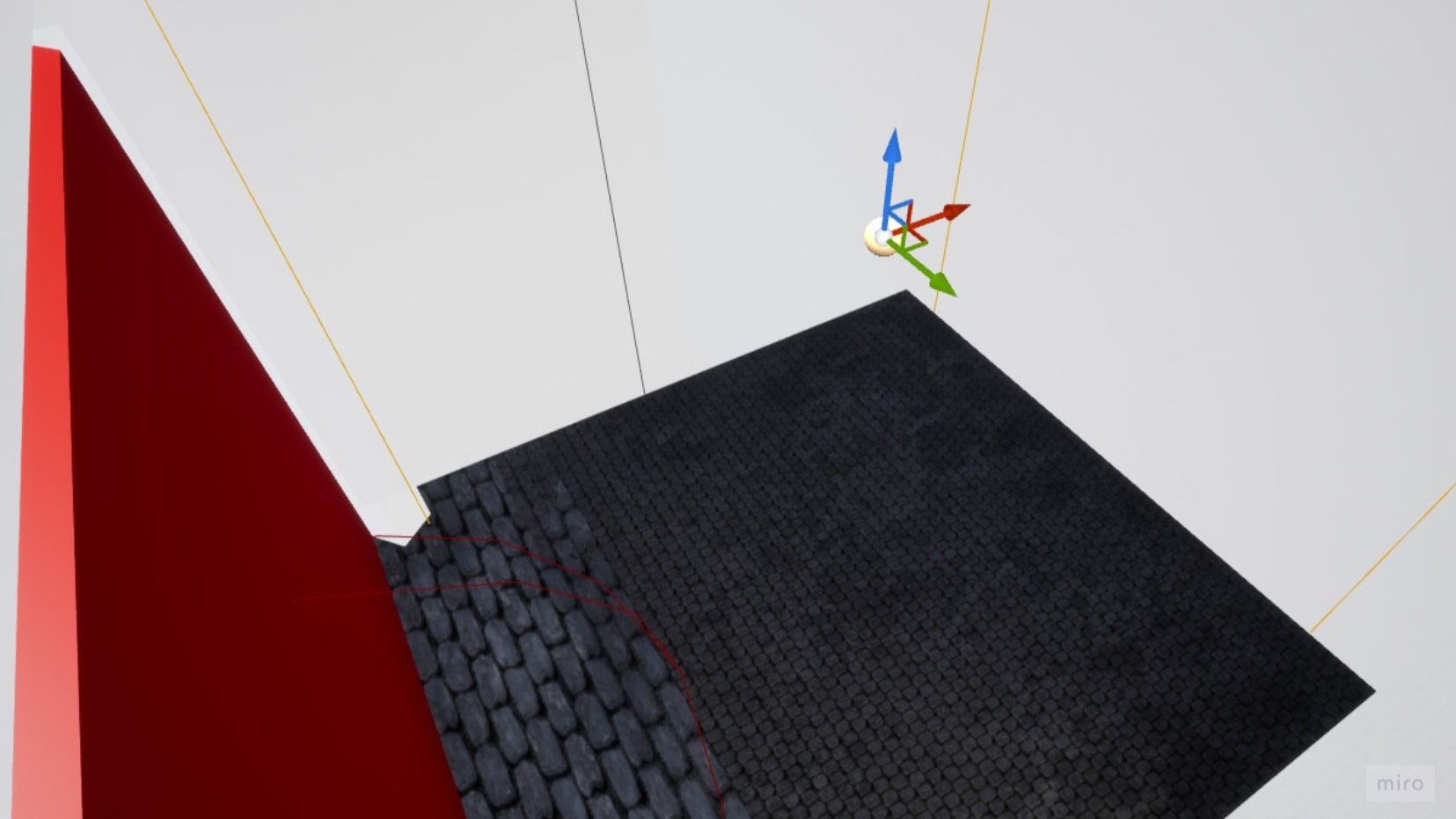
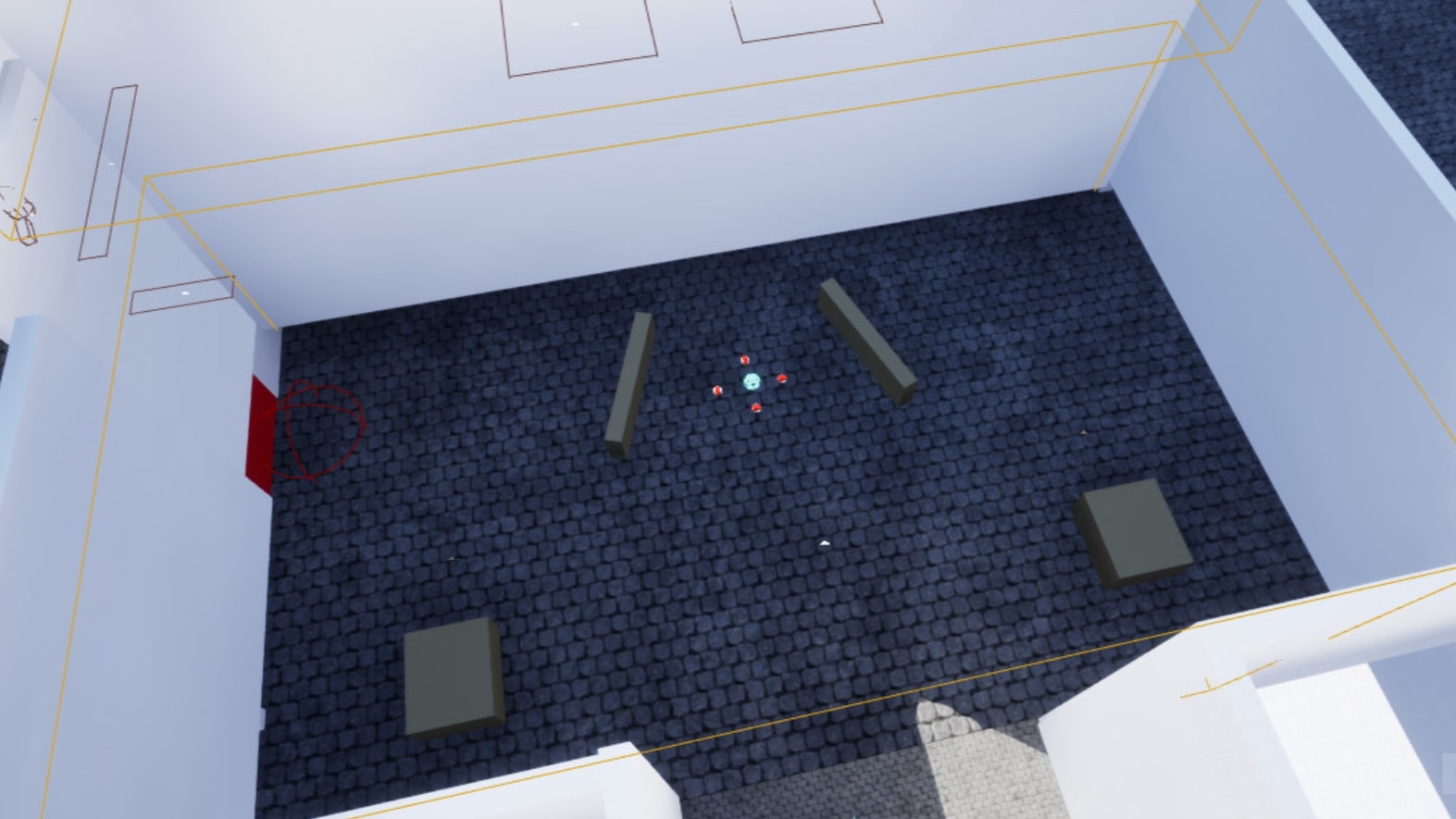
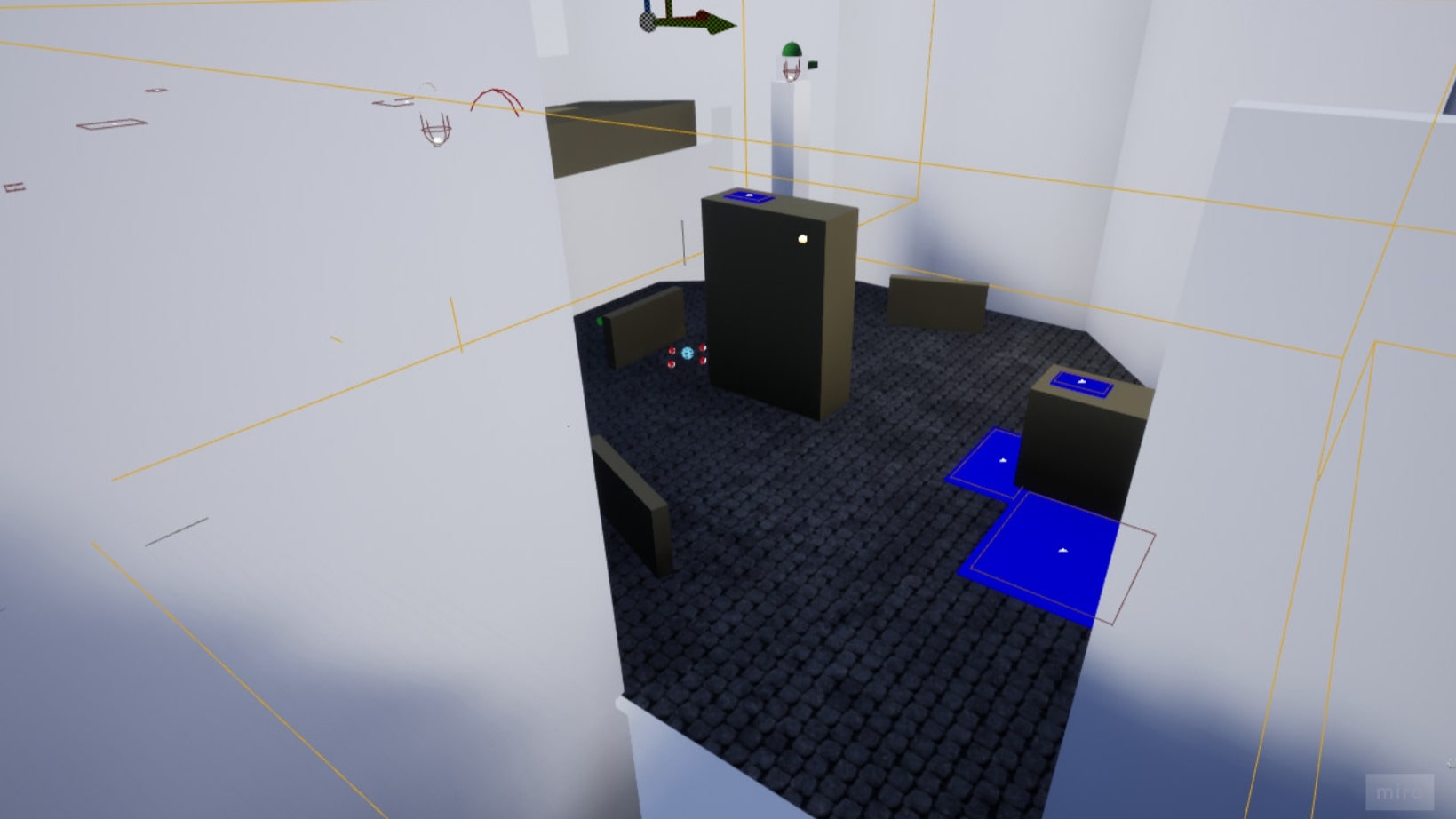
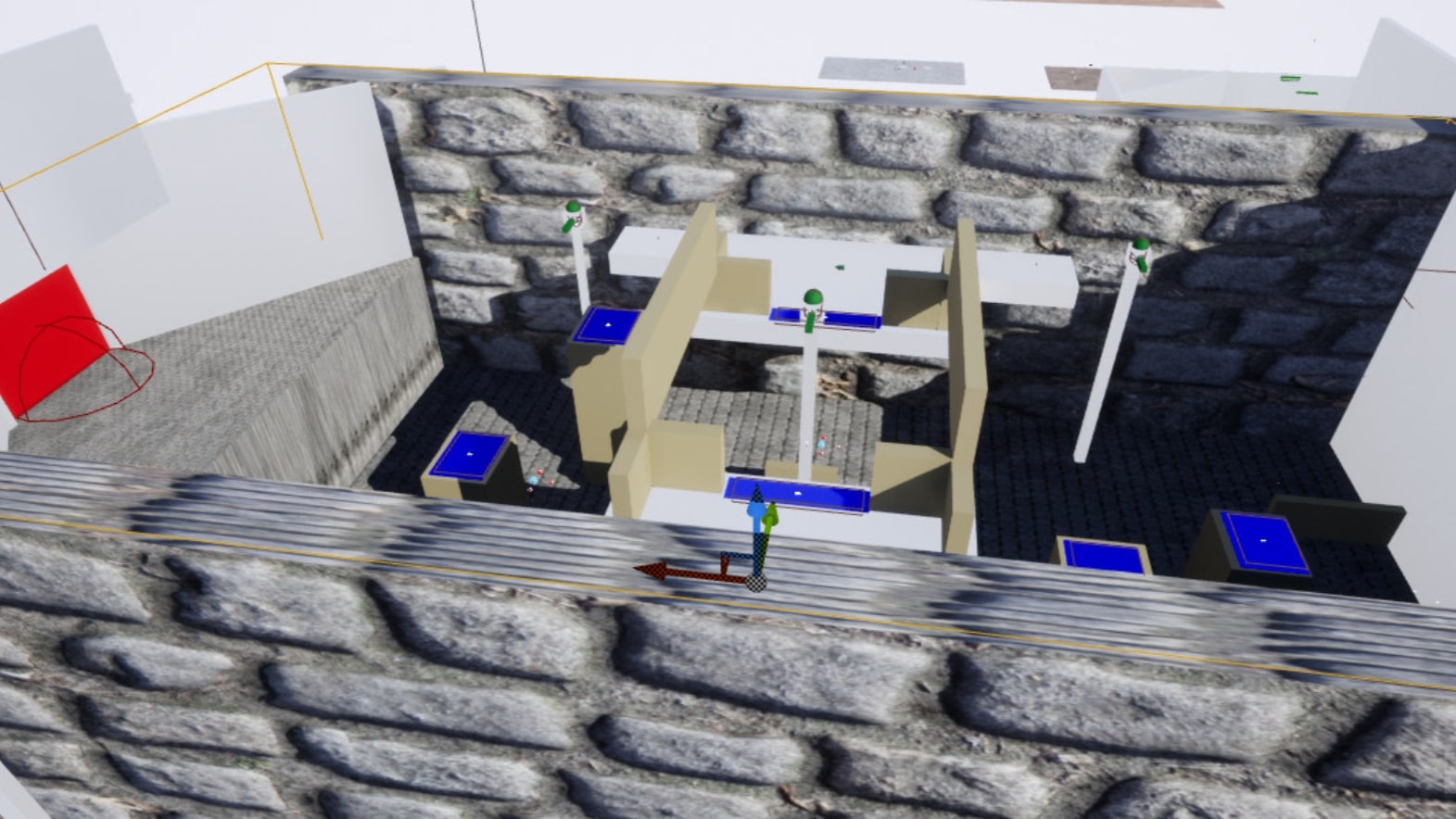
Room Based Spawning
Technique & Use-case:
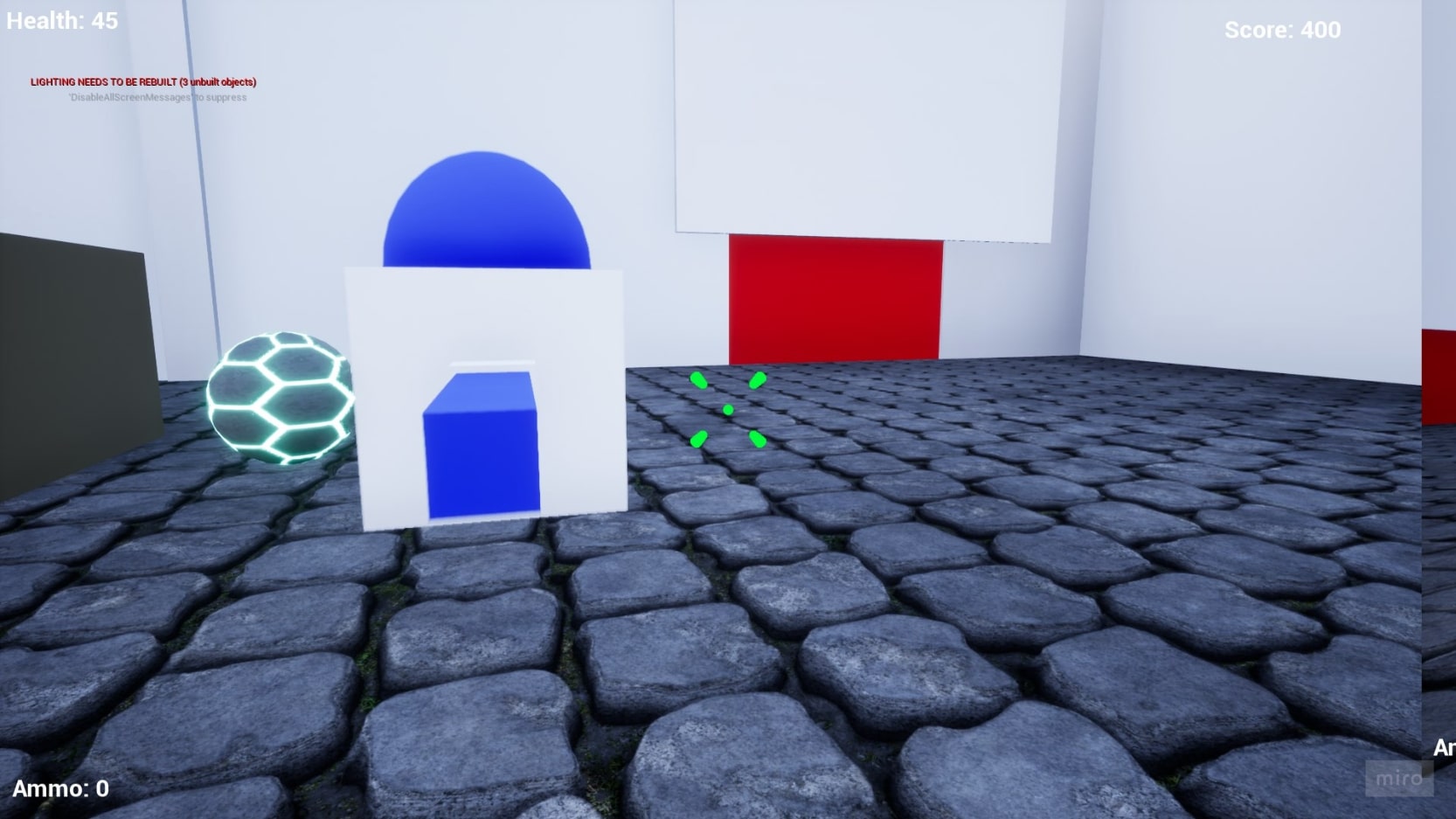
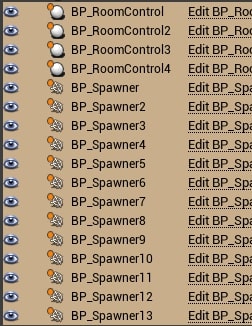
Implemented room based spawning to control combat pacing and ensure encounters matched the player’s location.
Context of use-case:
Enemy waves only activated in the room the player was currently in, preventing overwhelm and keeping encounters focused on the intended space.
Technique Detail:
- Room controllers activated local spawners on entry
- Previous rooms deactivated to reduce backtracking threats
- Spawn timing balanced to maintain pressure without overcrowding
Prototype 2
Items
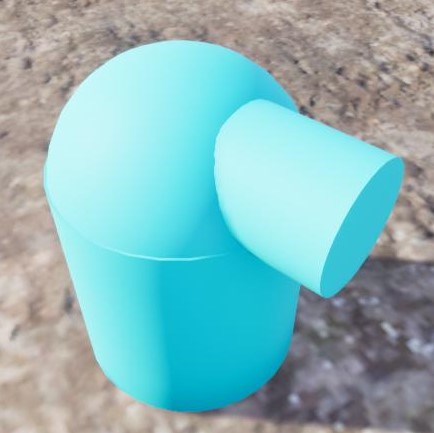
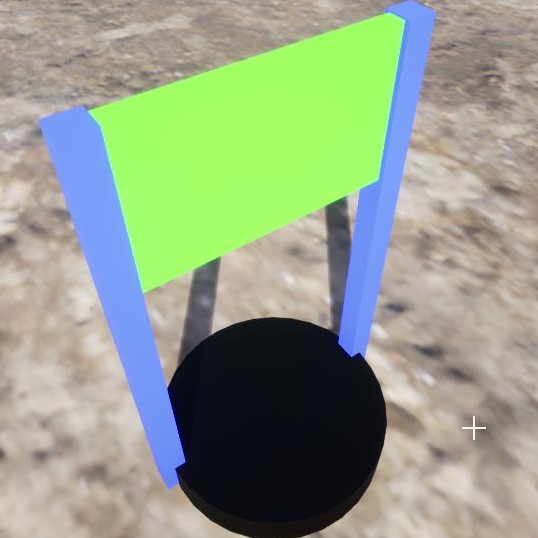
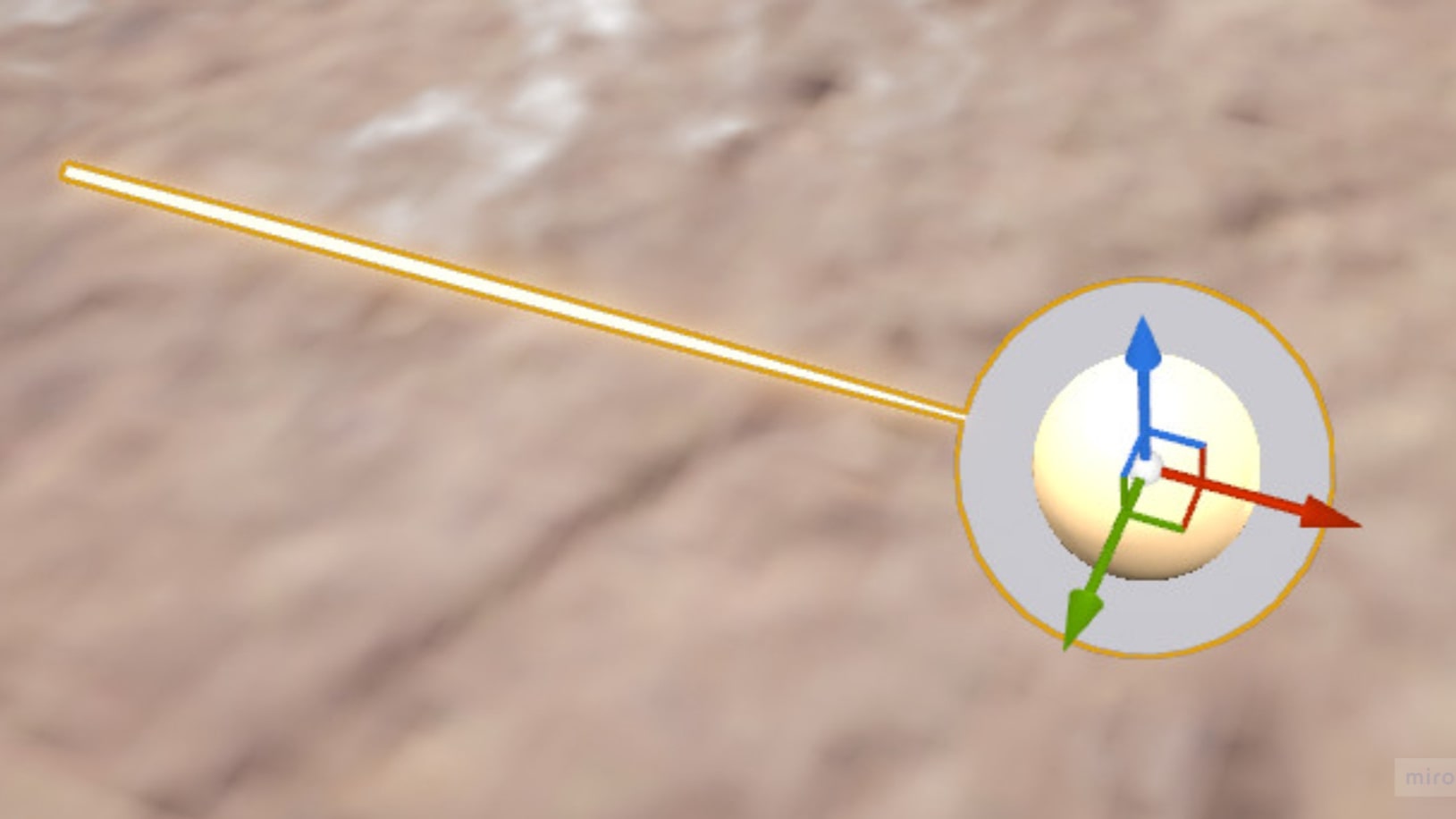
Technique & Use-case:
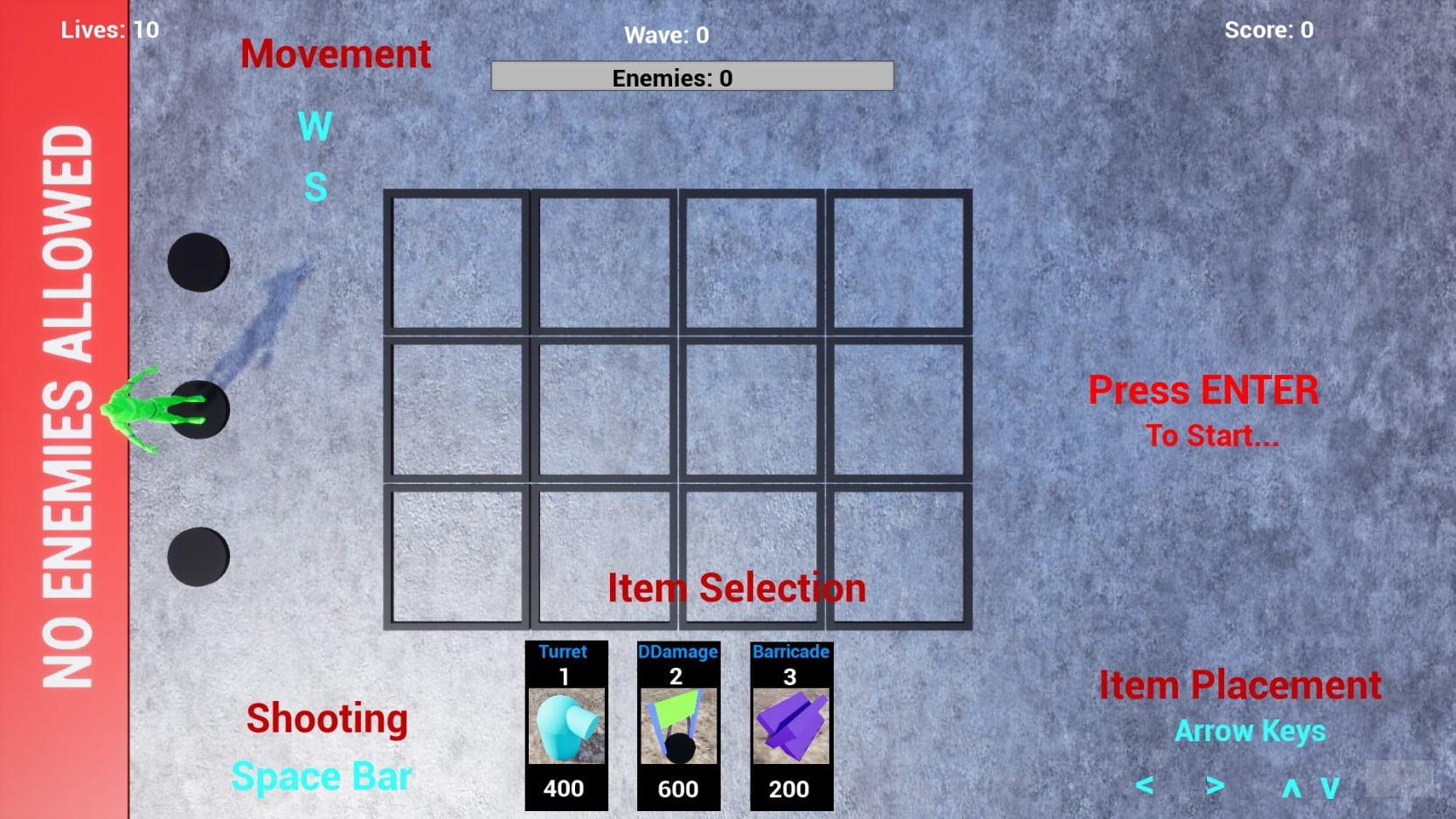
Built a purchasable item system with grid placement to give players strategic tools that shaped combat flow and supported different playstyles.
Context of use-case:
Players spent points to buy and place items that could stall enemies, provide sustained fire, or enhance damage output. This system created a loop of resource management, lane control, and tactical decision making.
Technique Detail:
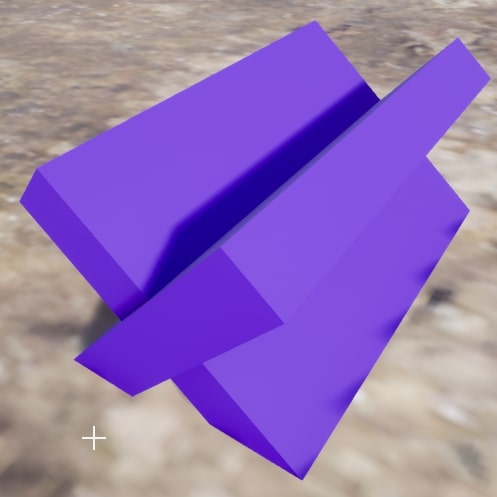
- Barricade – High health blocker that stopped enemies and forced them to attack, giving players more time to respond.
- Auto Turret – Automated defense that fired projectiles on a timer, offering consistent lane coverage.
- Damage Amplifier Node – Utility item that doubled projectile damage by converting bullets that passed through it, rewarding creative placement.
Week 3 polish added UI hotkeys, placement cues, firing sounds, destruction feedback, and pulsing visuals to clarify each item’s role.
Grid System
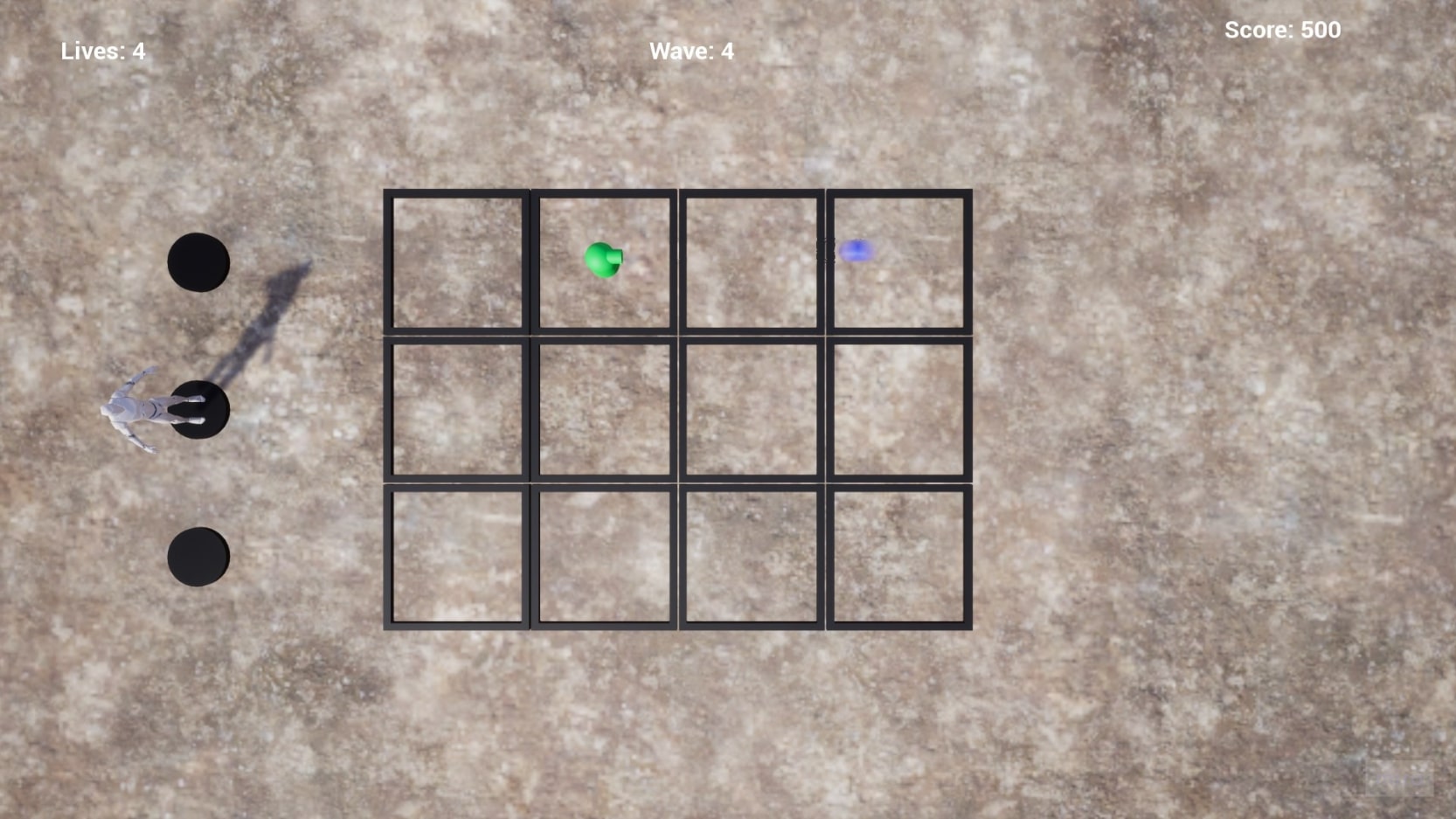
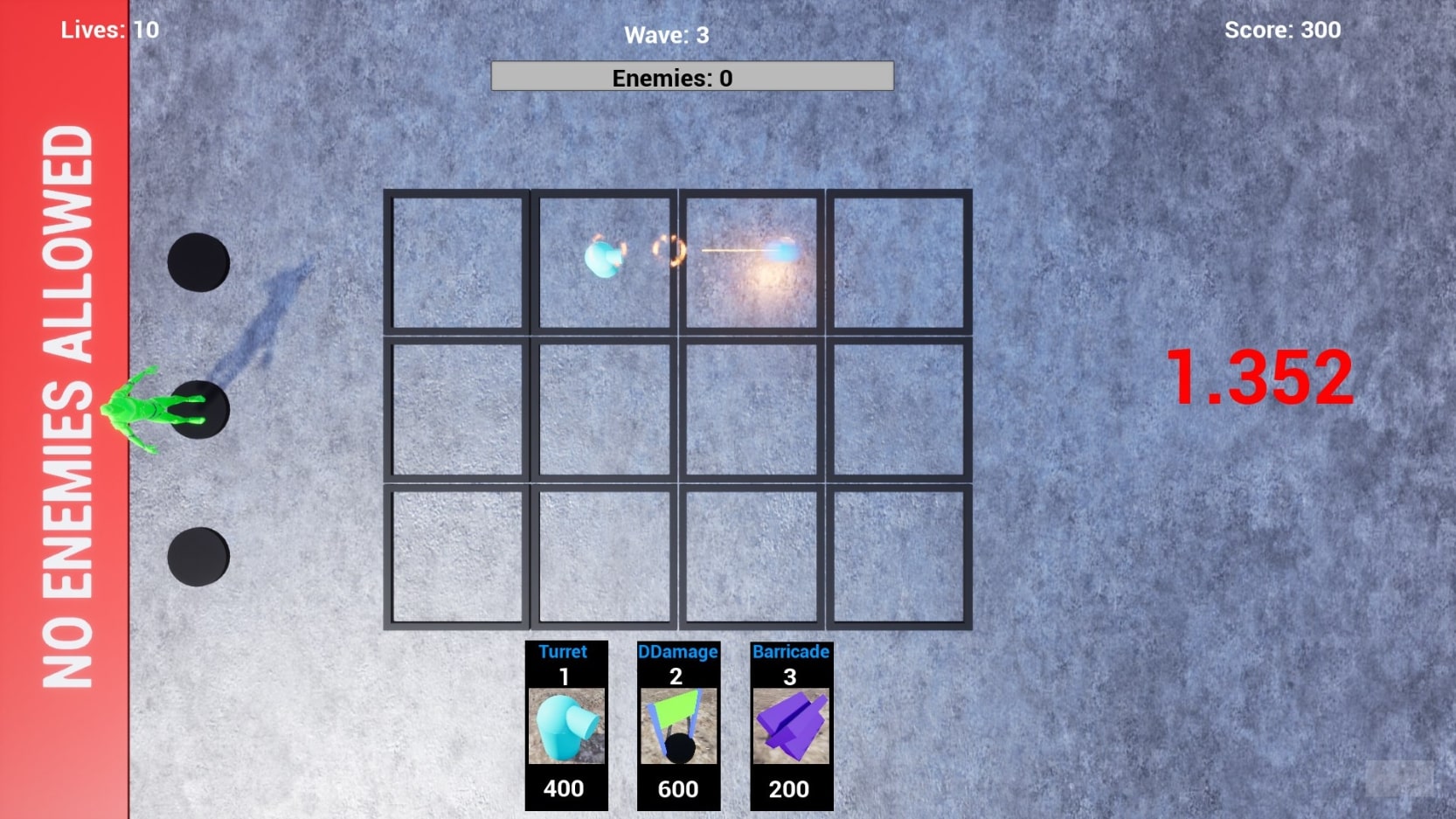
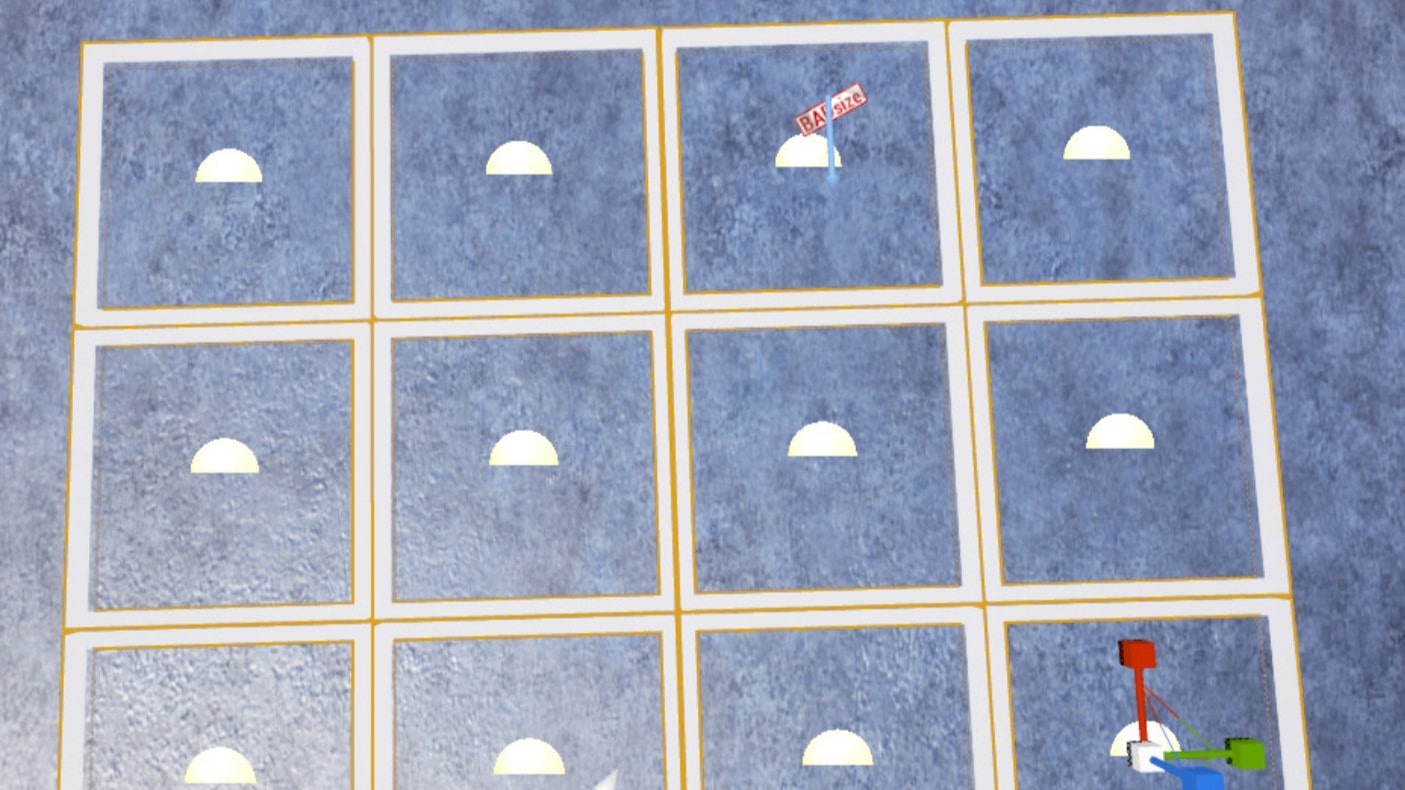
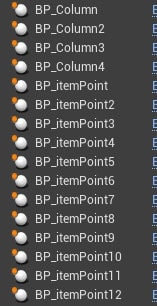
Technique & Use-case:
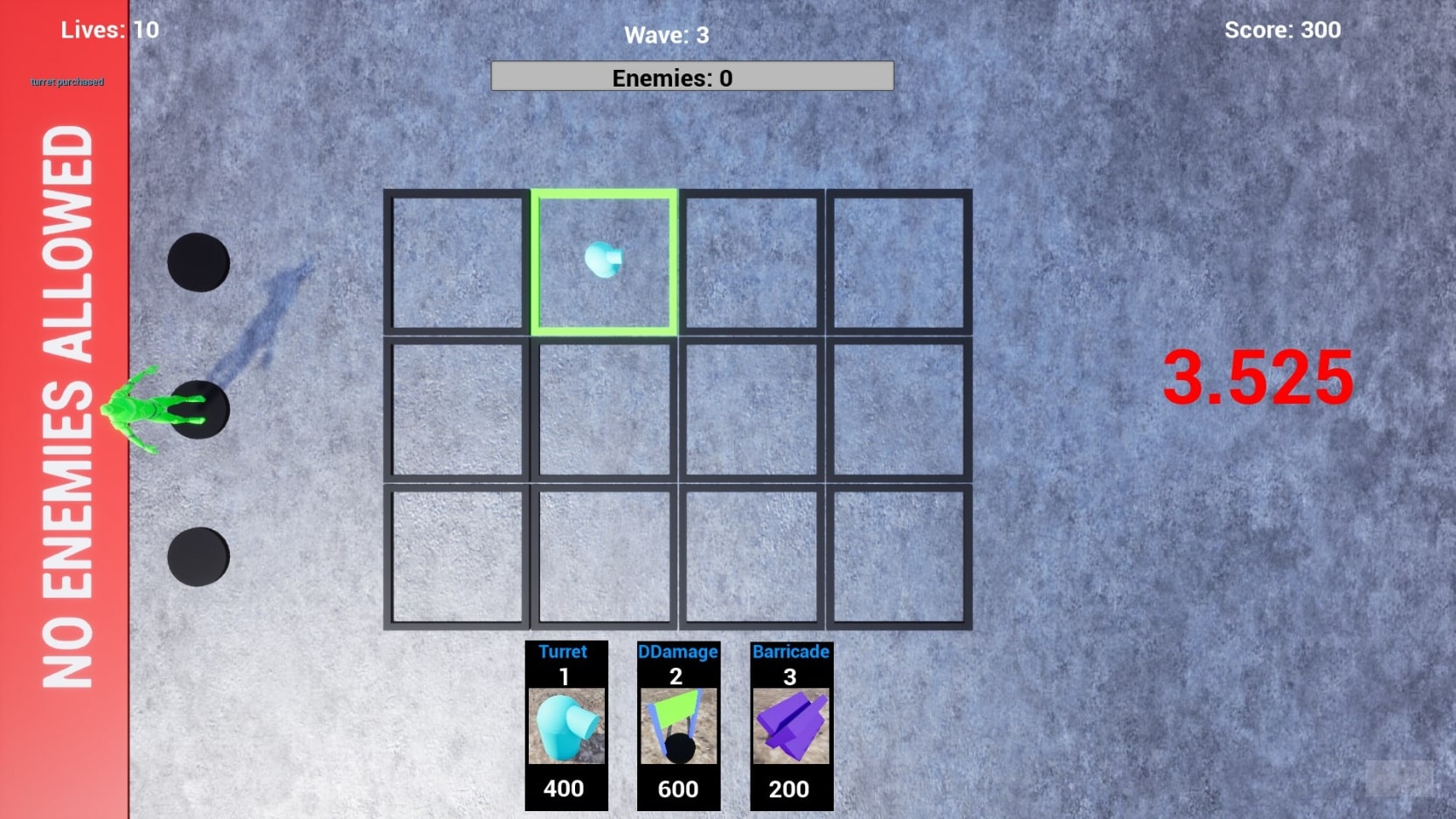
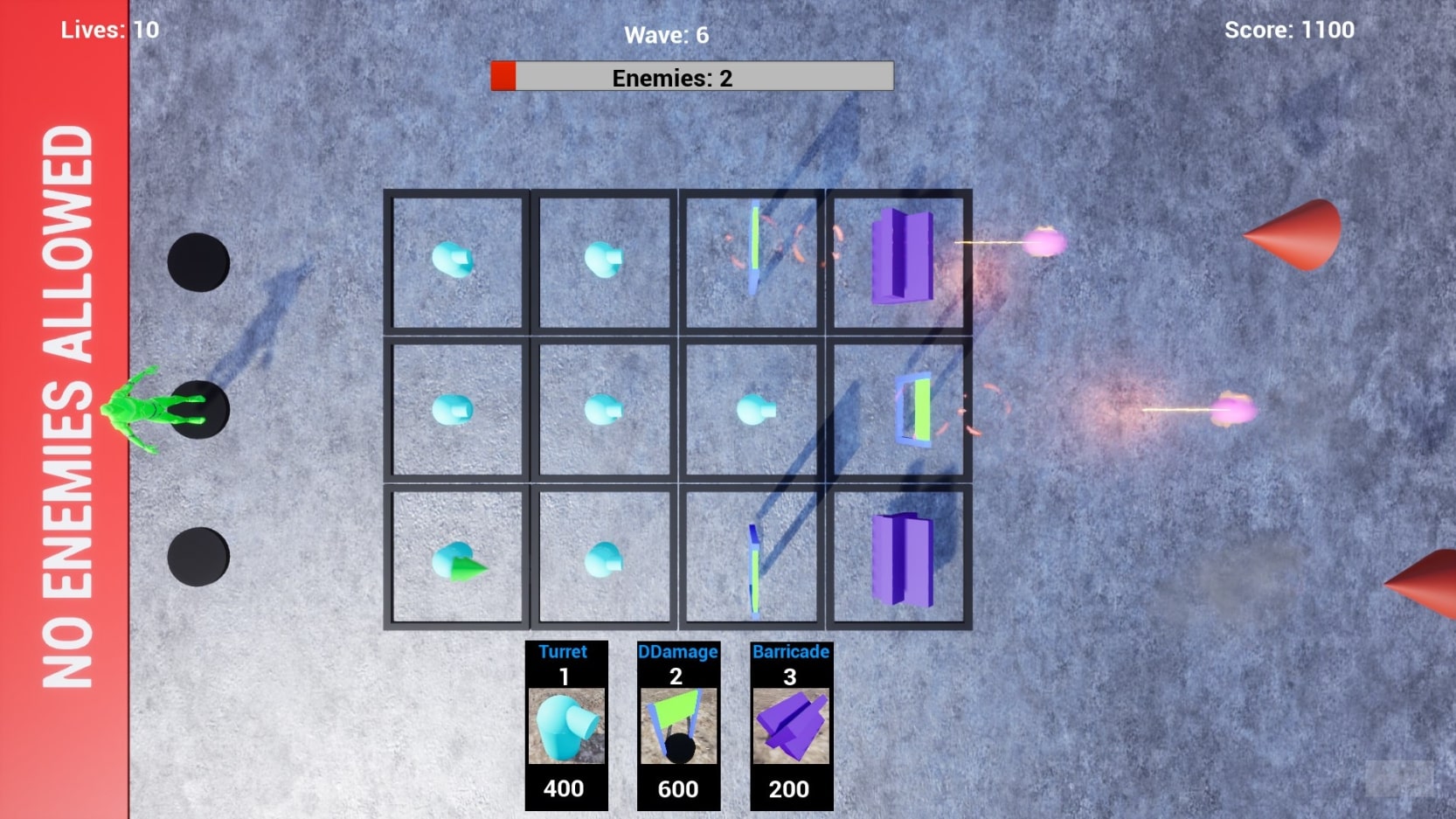
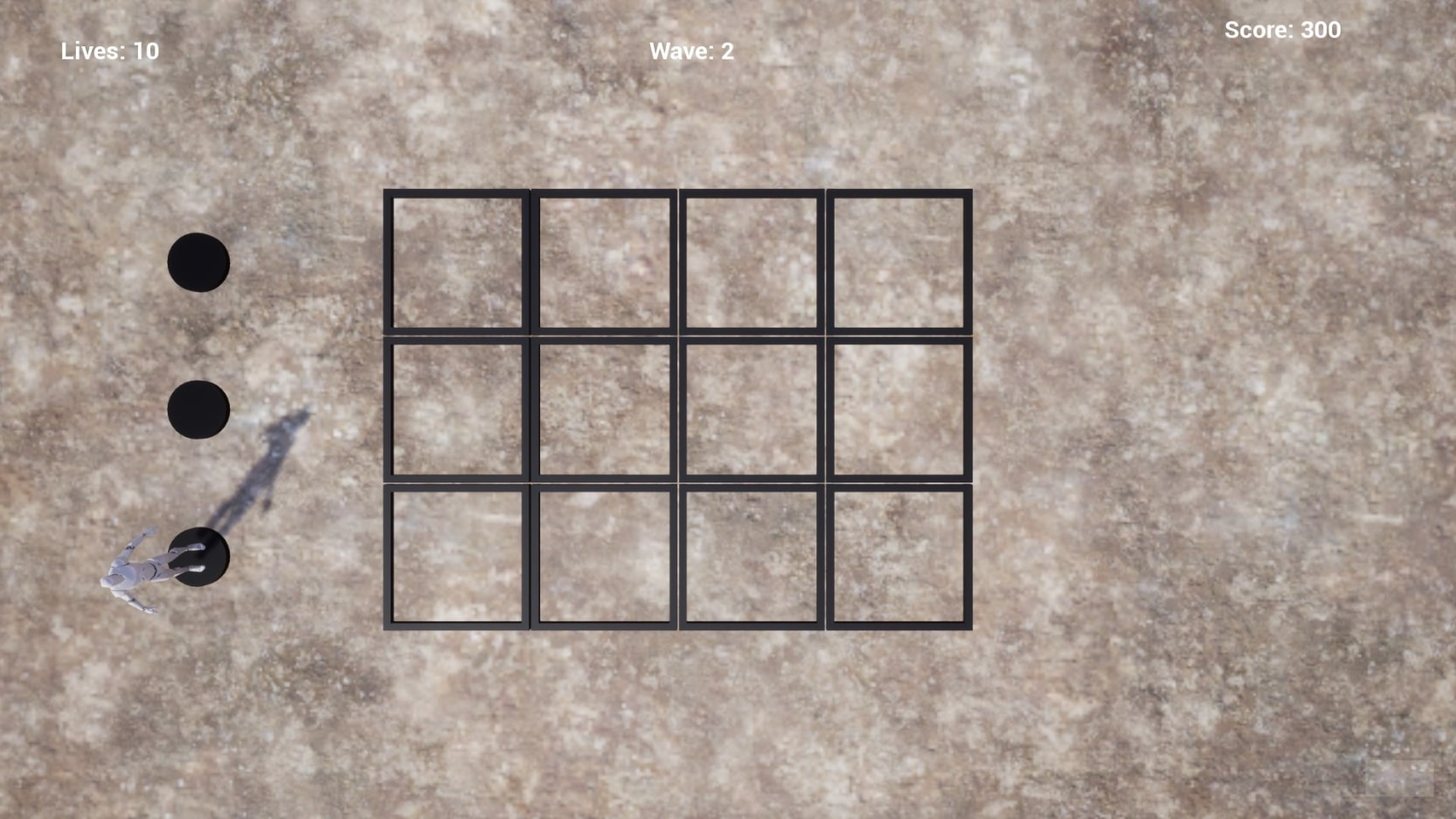
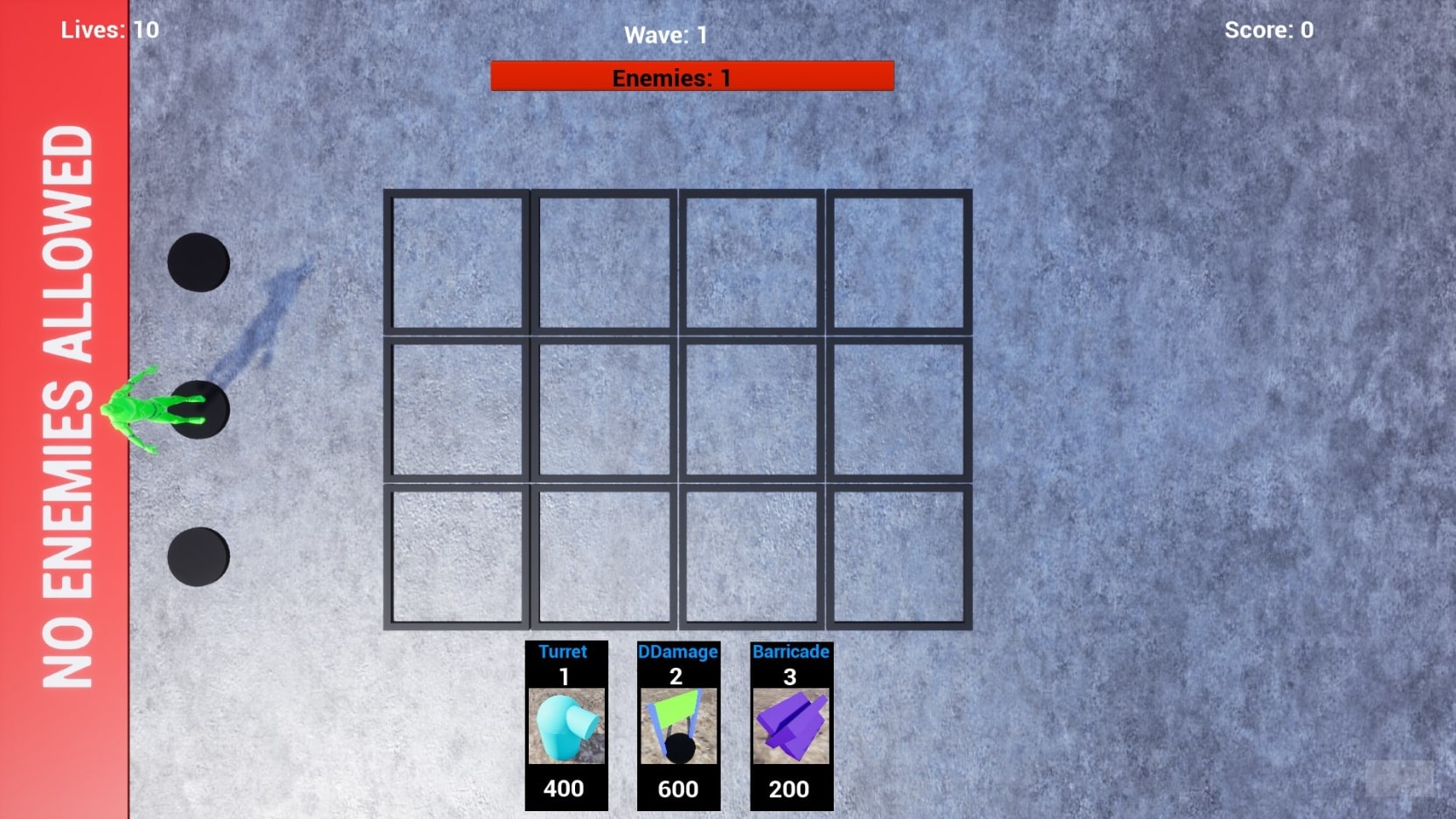
Developed a custom grid placement system to manage item positioning, interaction, and alignment with enemy lanes.
Context of use-case:
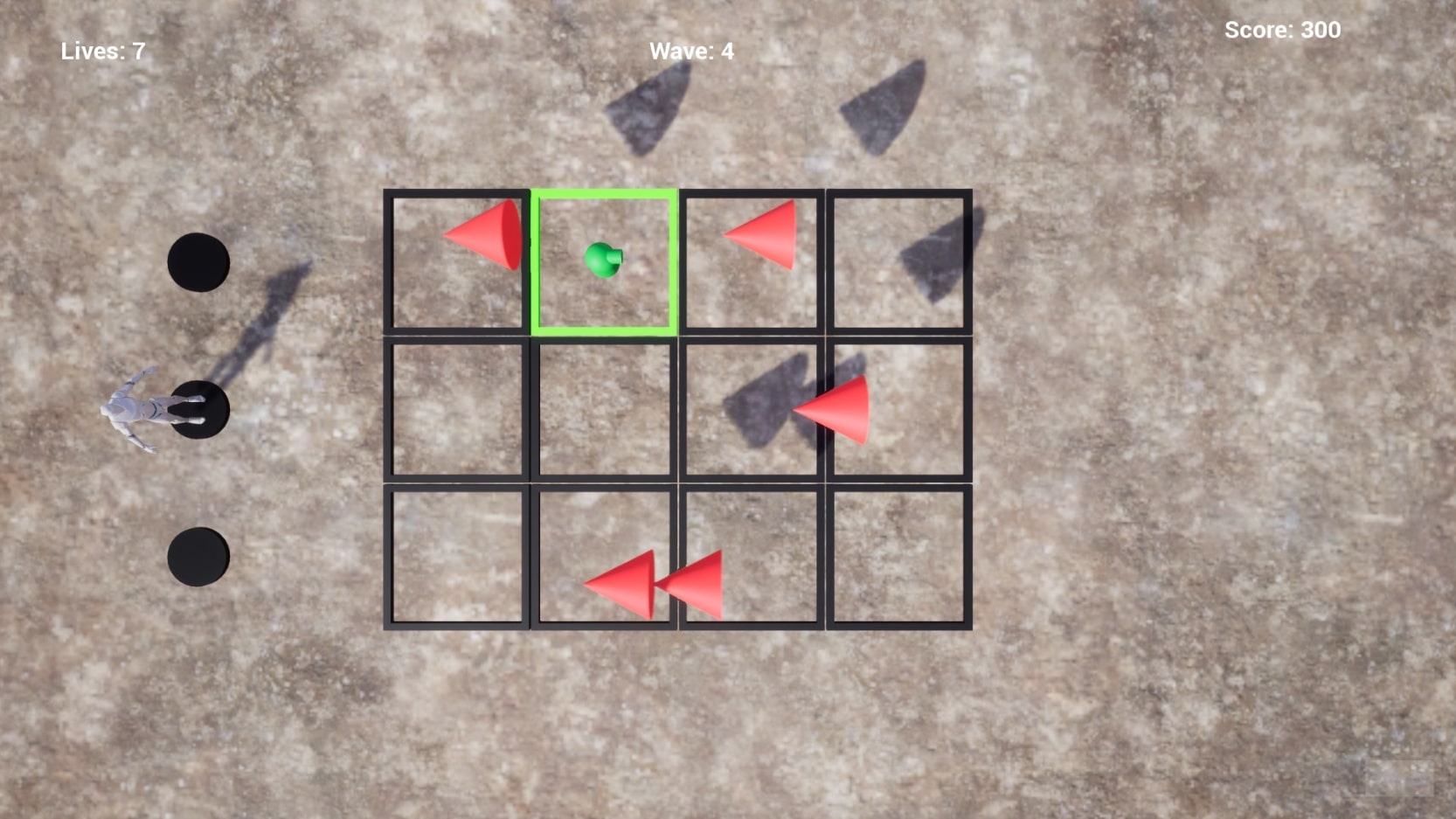
Players navigated a preview item across grid spaces before confirming placement, ensuring defenses were clearly organized and integrated with enemy movement.
Technique Detail:
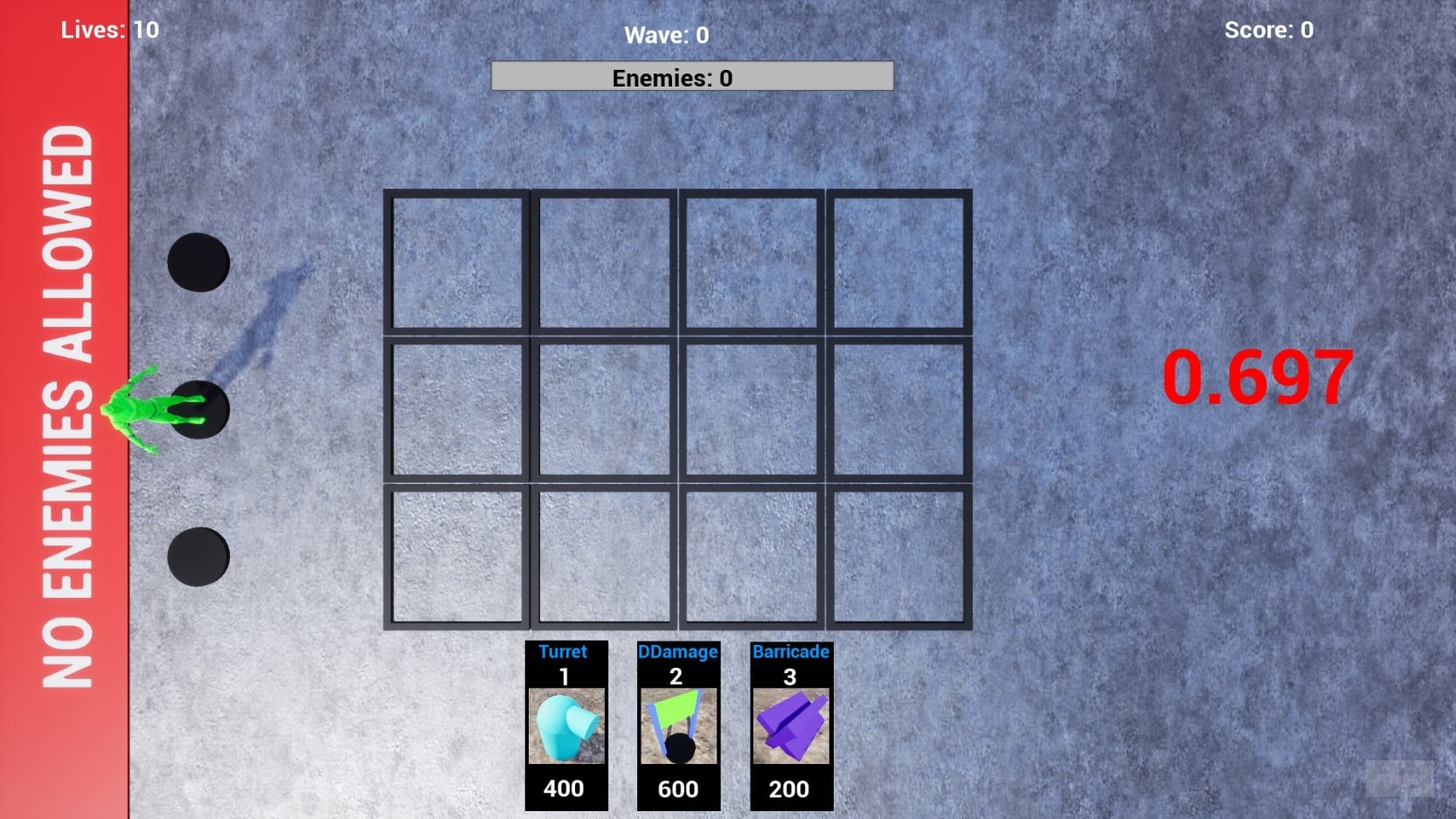
- Grid composed of rows and columns, each space capable of holding one item
- Arrow key input moved the preview item across spaces, looping around at edges
- Confirming placement locked the item in and activated its function
- Week 3 polish added hotkey prompts, placement feedback, and interaction sounds for clarity
Wave System
Technique & Use-case:
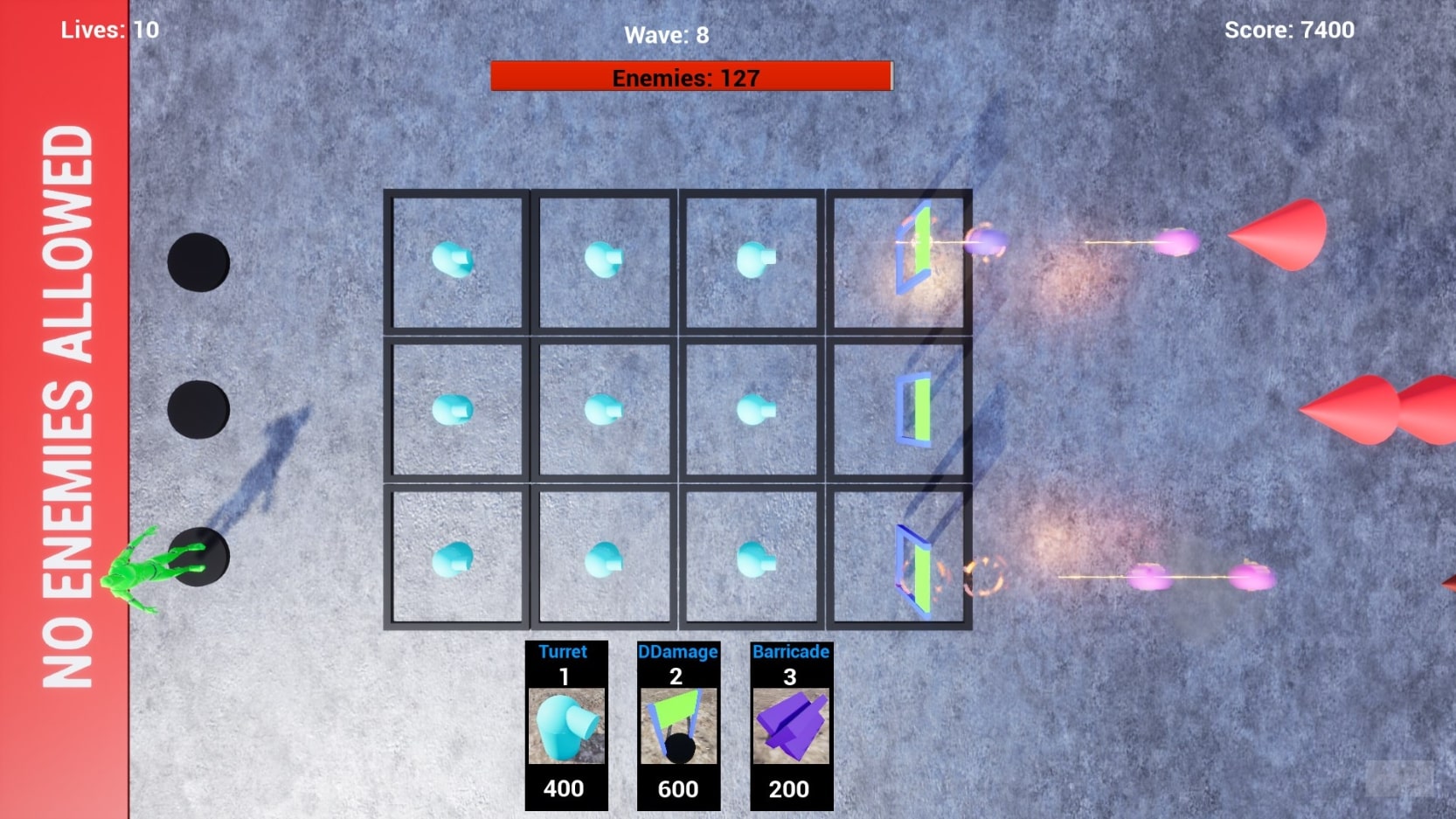
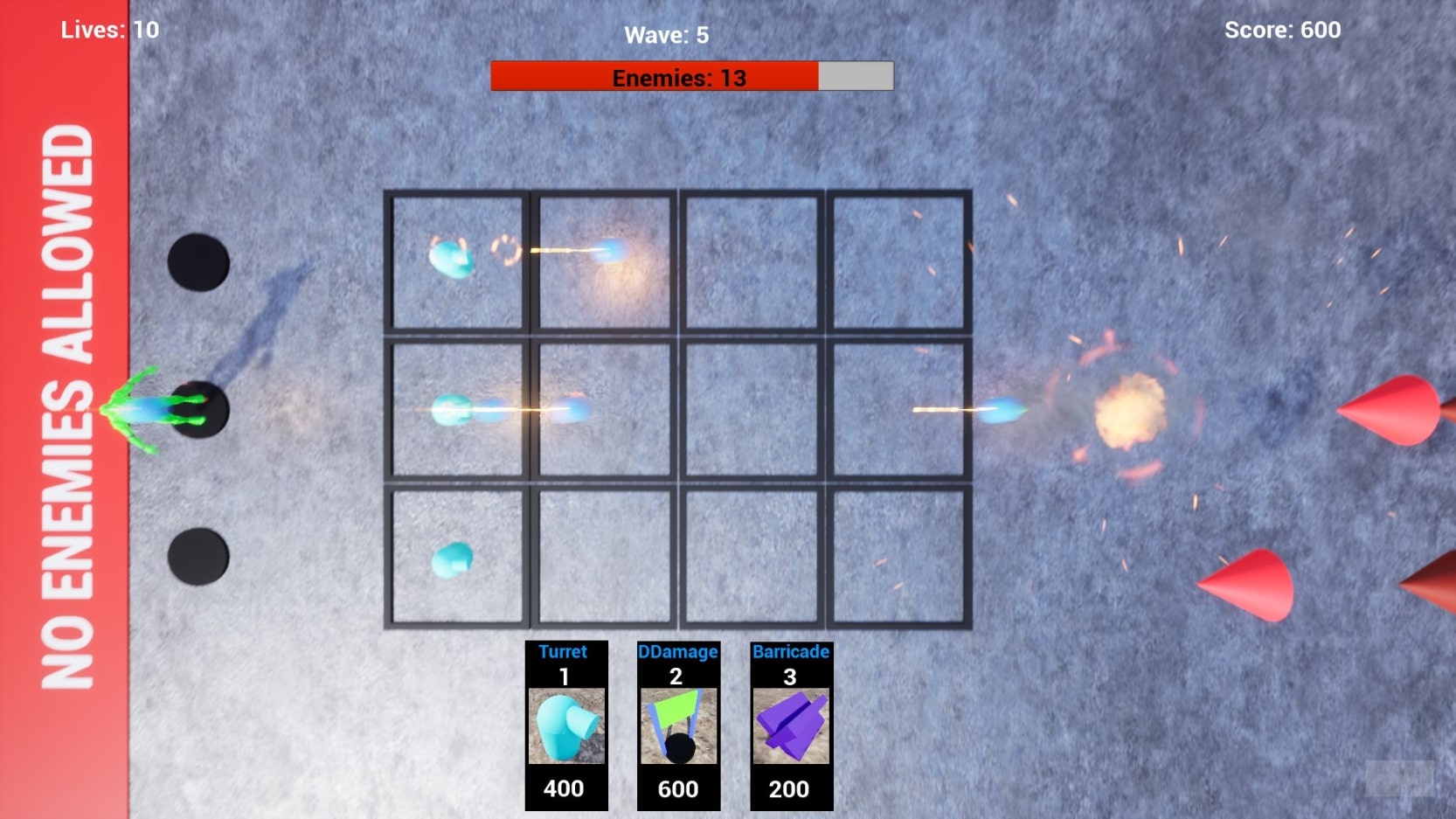
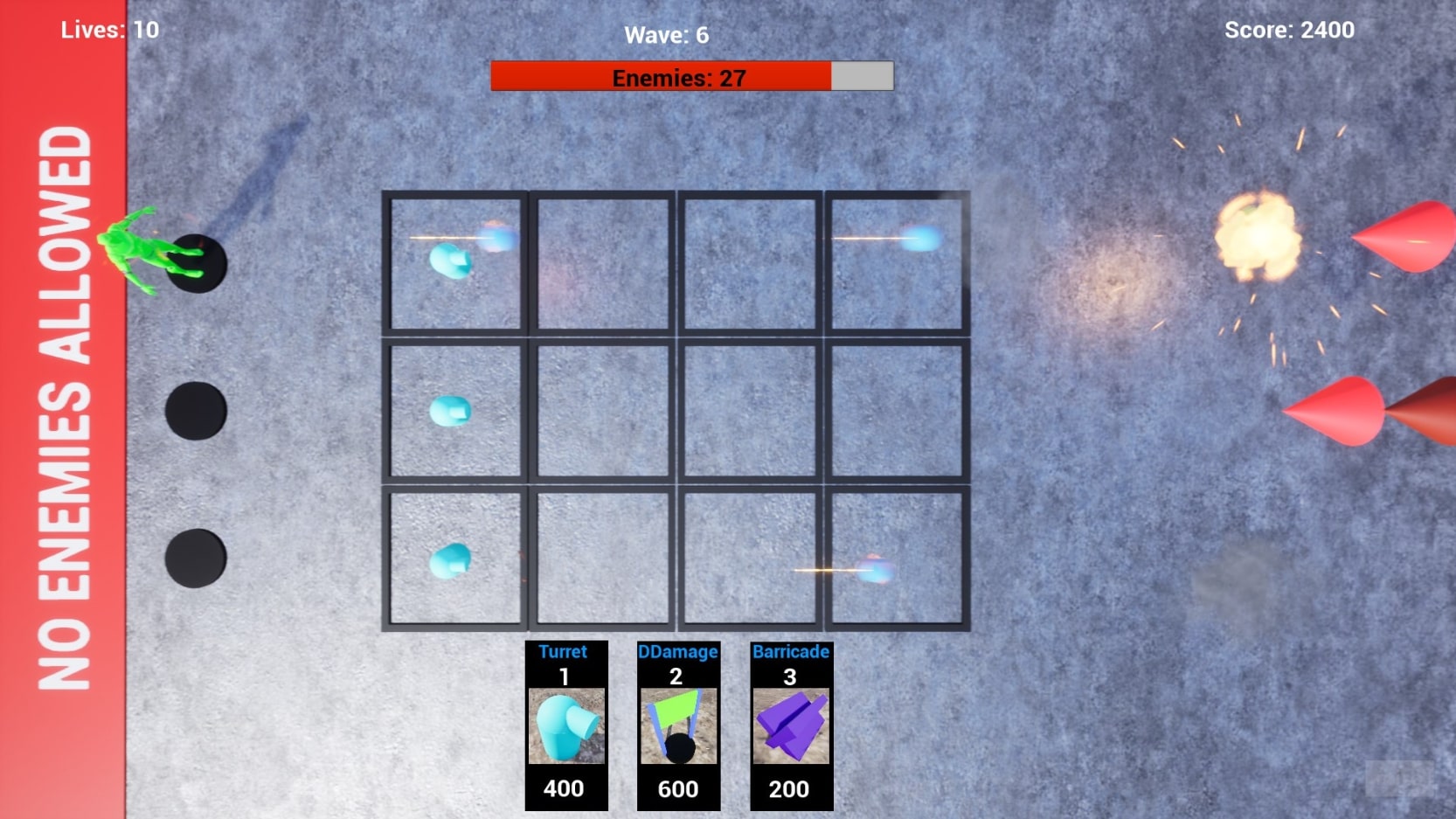
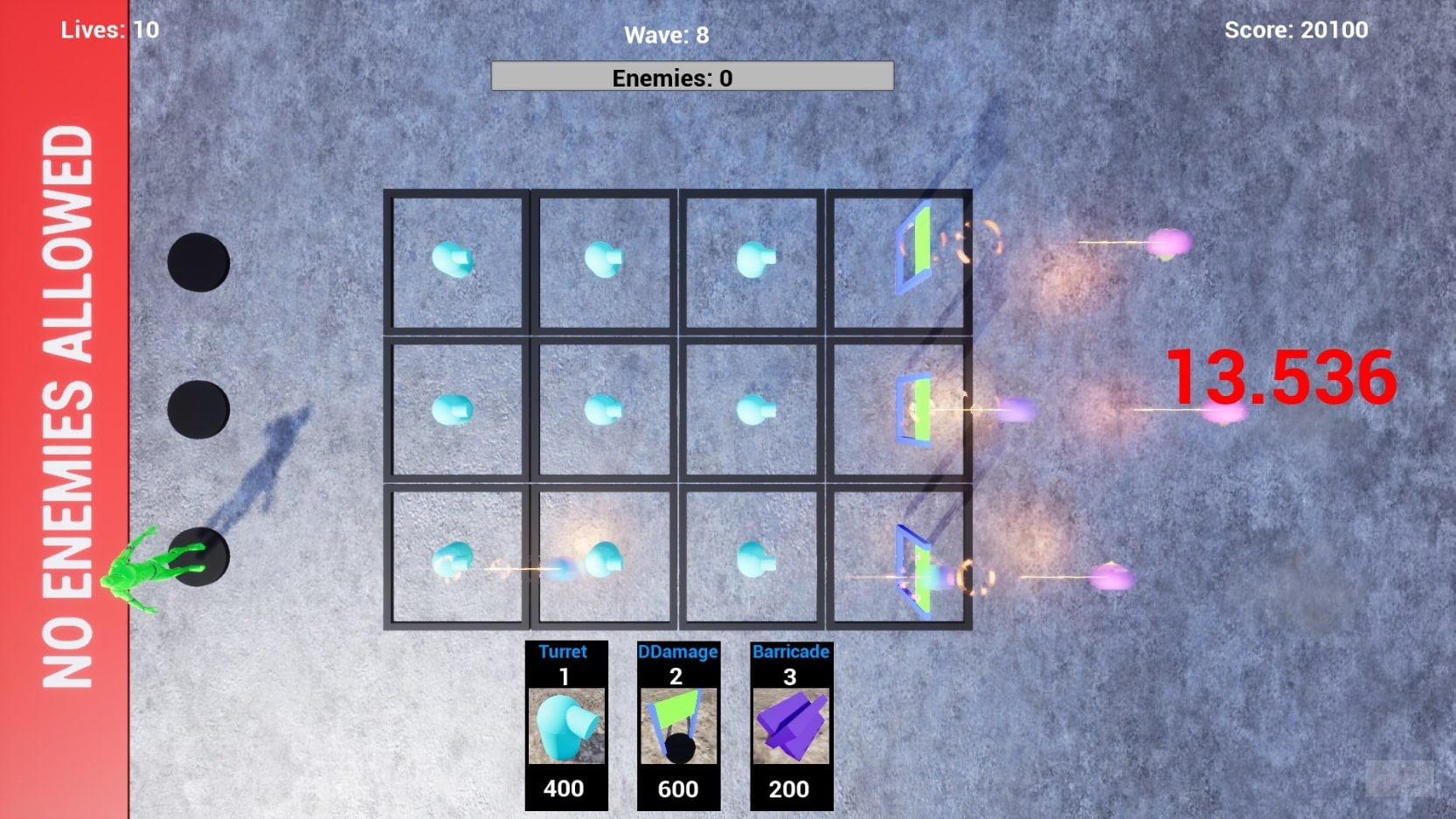
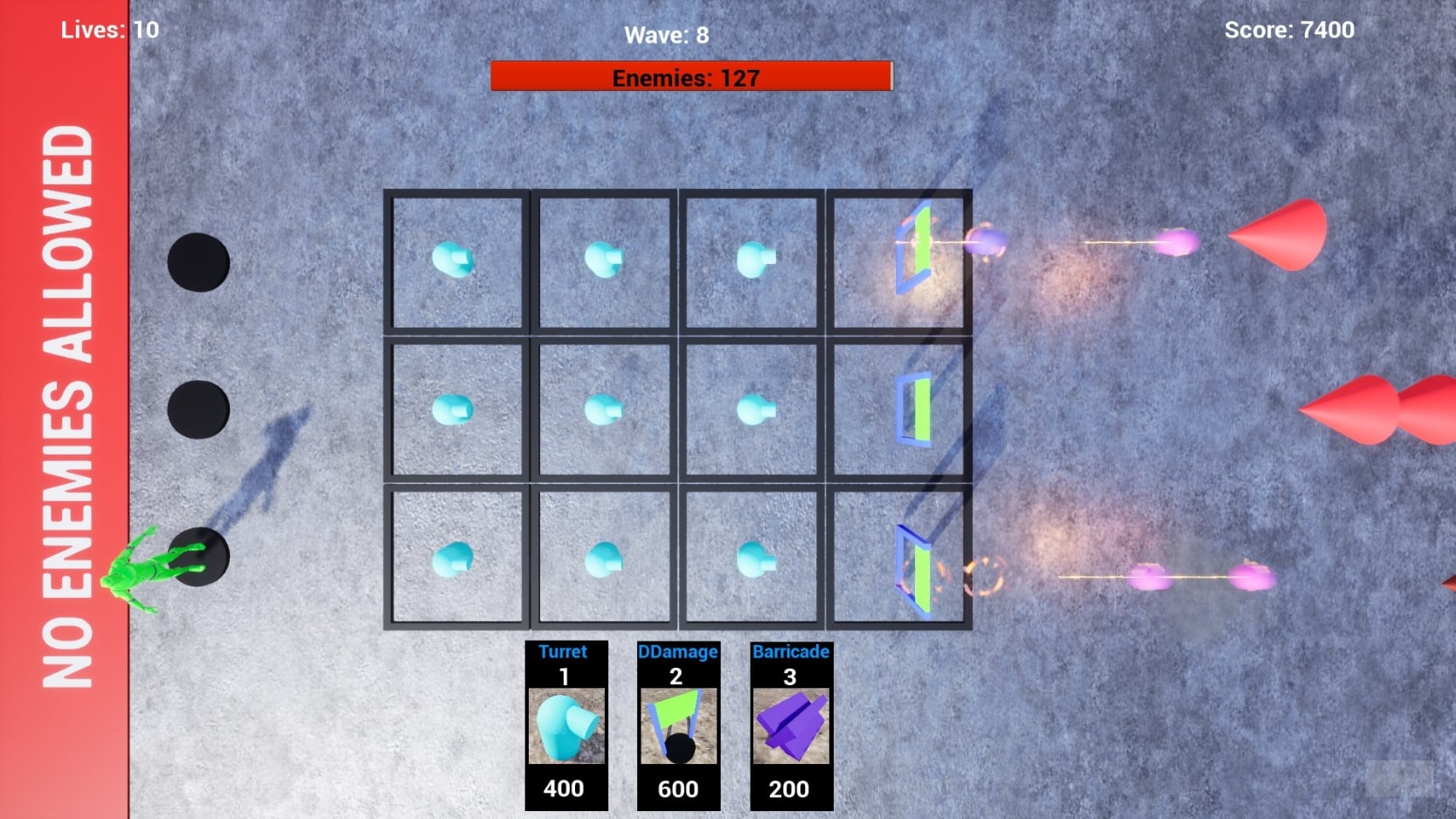
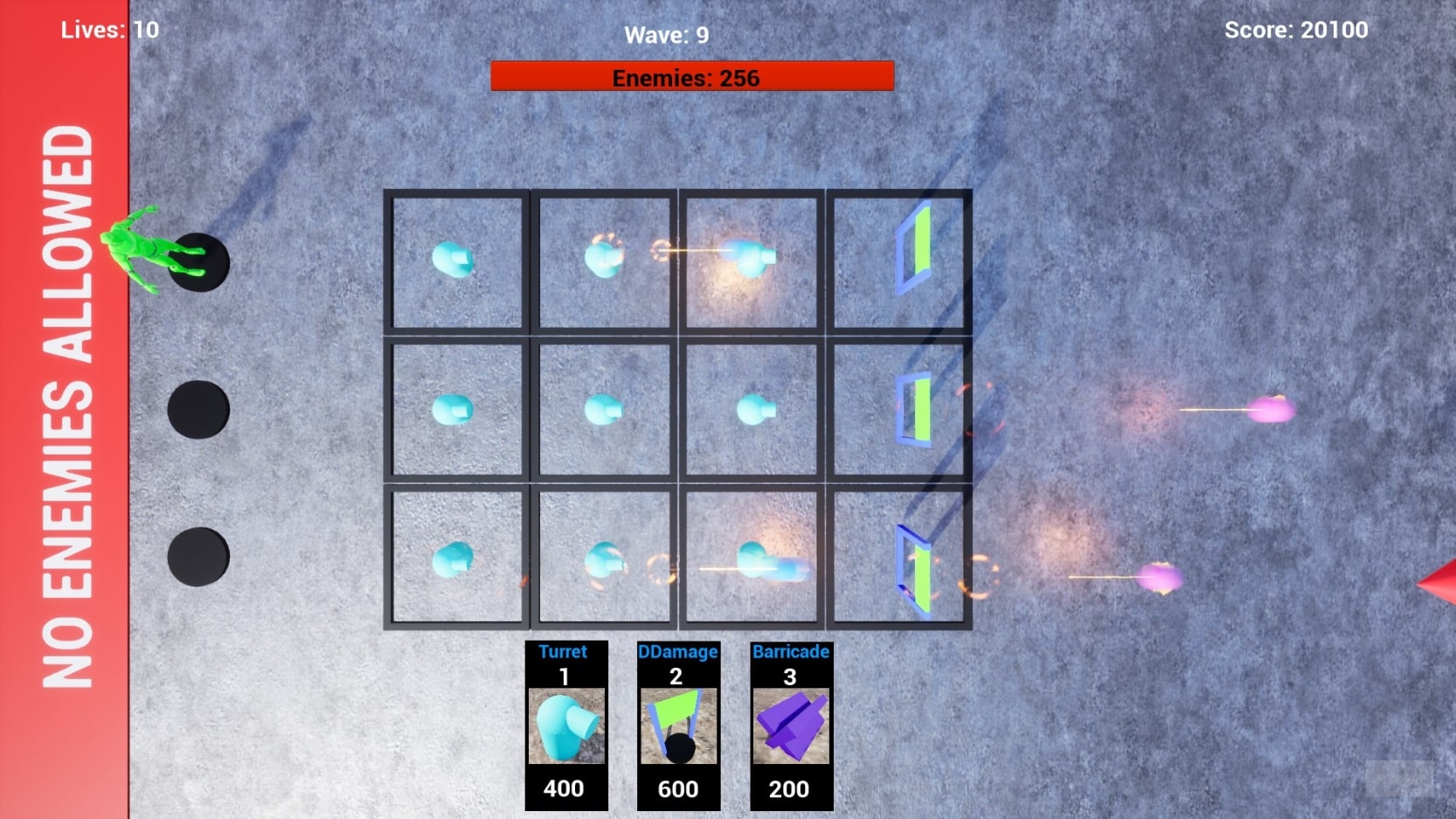
Implemented a wave manager that escalated difficulty by exponentially increasing enemy counts while controlling the ratio of weaker to stronger enemies.
Context of use-case:
Each wave was designed to feel progressively harder without overwhelming players. Stronger enemies were introduced gradually, but weaker ones always remained the majority, keeping the pacing balanced and fair.
Technique Detail:
- Enemy counts increased exponentially with each wave
- Ratios ensured weaker enemies spawned more frequently than stronger ones
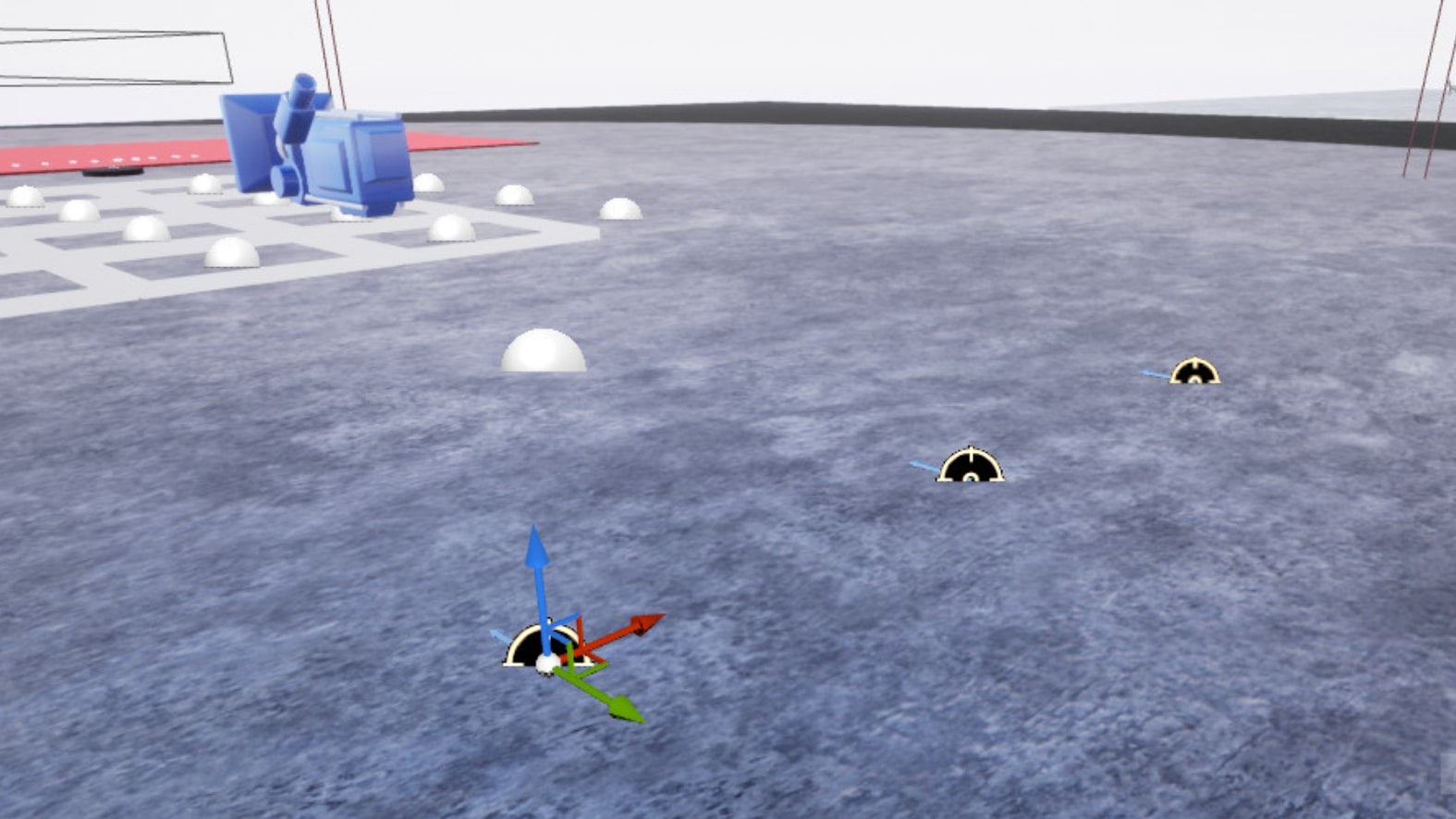
- Enemies appeared randomly across three lanes to keep positioning dynamic
- Week 3 polish added visible wave timers and audiovisual signals for wave transitions