Adventure Level 1
- Genre: 3D Action Adventure
- Type: Blockout
- Engine: Unreal Engine 4
- Tools: Adventure Level Provided Assets
- Iterations # 3
- Playtests # 2
- Role: Level Designer
Goal
My goal was to develop a story driven linear adventure level inspired by Uncharted, focused on traversal and environmental interaction. I drew influence from cinematic adventure design, using mechanics like climbing, jumping, and simple interactables to create a sense of exploration.
Throughout this project, I pushed myself to build a strong foundation in level design. Specifically, I focused on improving in a few key areas:
Applying shape and color theory for player guidance
Using landmarks, leading lines, and breadcrumbs
Designing multi-stage progression through diverse environments
Integrating interactables into traversal flow
As one of my first Unreal Engine projects, it gave me structured exposure to both solo and collaborative workflows. I built the level independently from concept to polish, then transitioned into team development, where I learned version control, level integration, and asset replacement. This experience established many of the fundamentals I continue to build on today.
Level Overview & Highlights
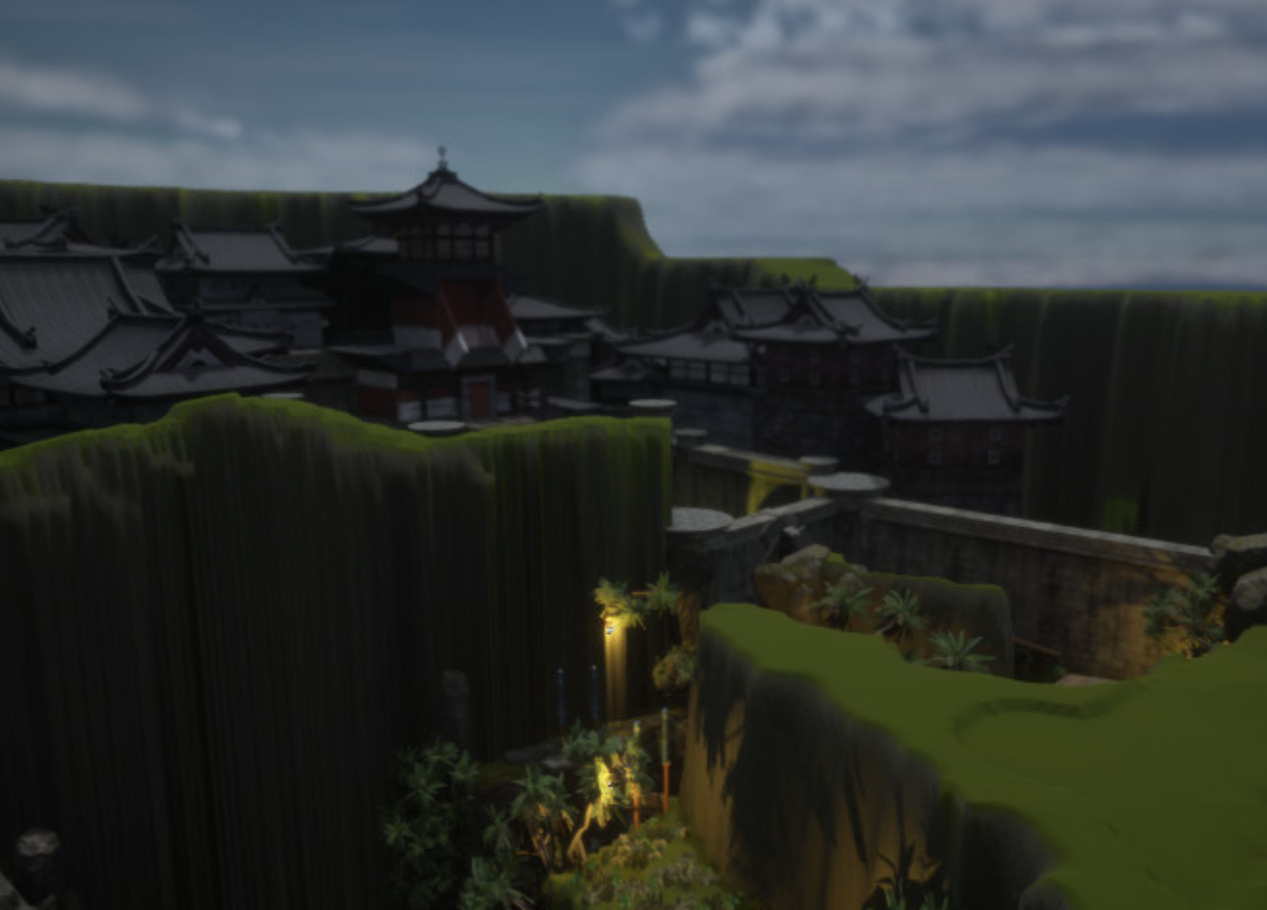
The level is set on an abandoned island marked by shipwrecks, overgrown jungle, battlefield ruins, and a forgotten courtyard, leading into an ancient temple and treasure chamber. The environment emphasizes natural traversal and layered exploration without NPCs or fantasy elements, relying instead on atmosphere and environmental storytelling.
The player takes the role of an adventurer navigating the island in search of treasure. Progression emphasizes traversal mechanics such as walking, jumping, and climbing, while integrating simple interactables including gates, chests, and a statue-and-sword door system. Visual design choices like color, shape theory, and landmarks guide the player organically through each stage of the journey.
Level Start
Technique & Use-case:
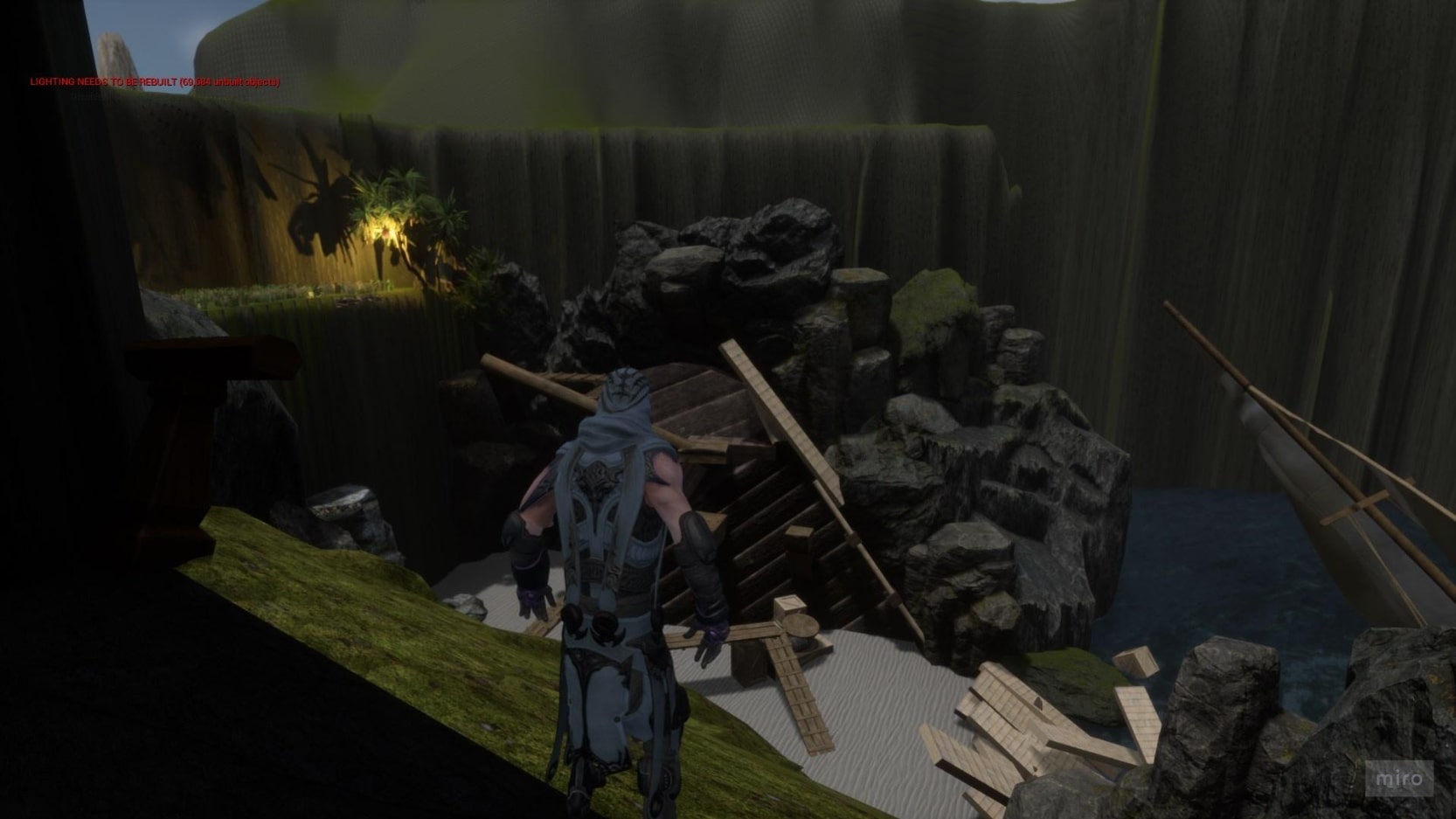
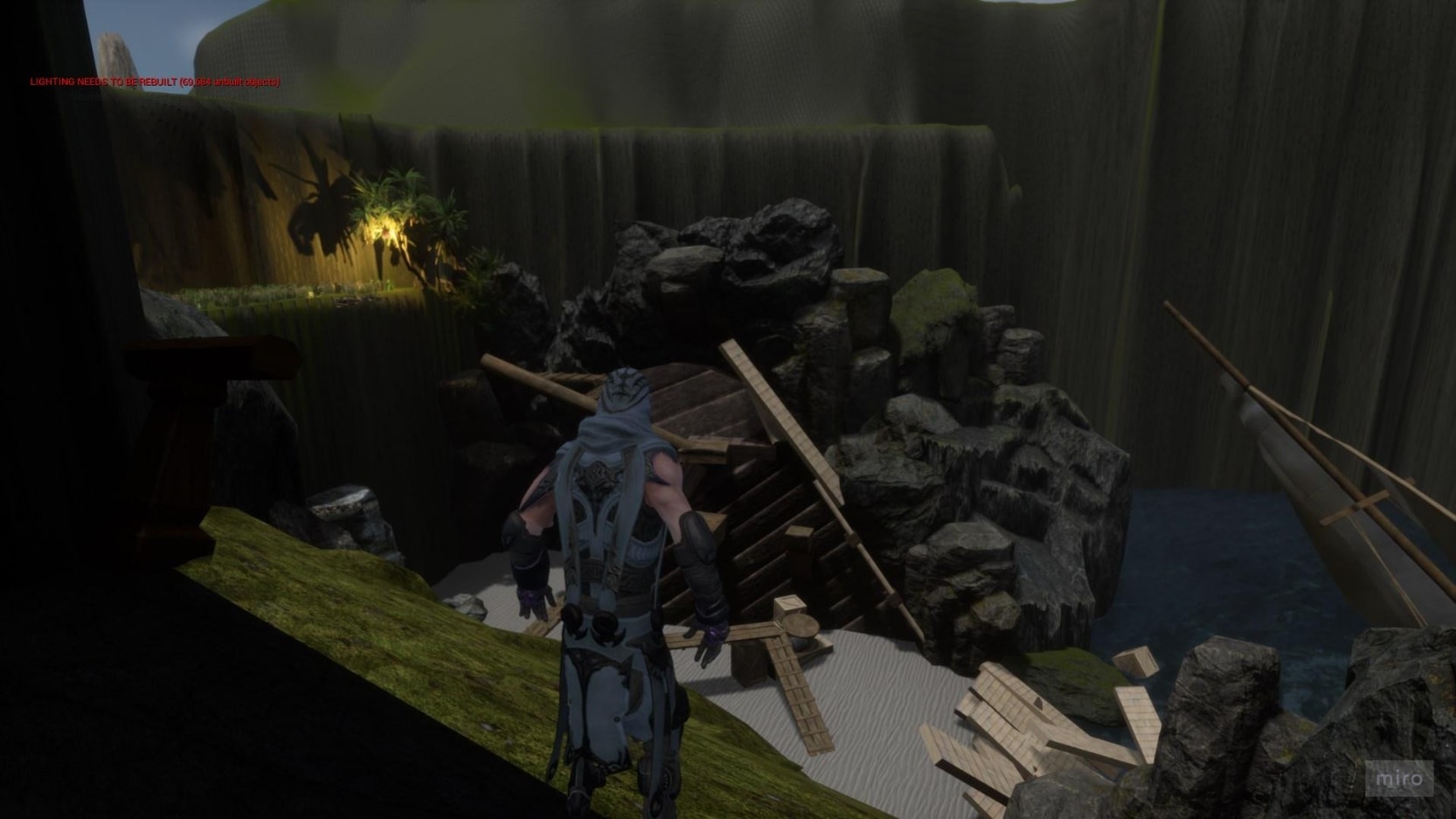
Framed the level’s opening with a shipwreck vista to orient the player and establish their first traversal goal.
Context of use-case:
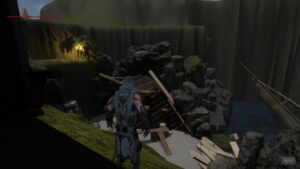
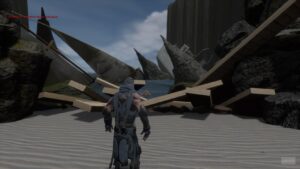
At the start, players emerged on a beach with a campsite behind them, a cliff rising ahead, and the remains of a shipwreck to their right. The shipwreck immediately communicated both narrative context and the path forward, blending setting with functional design.
Technique Detail:
- Shipwreck placed as a landmark and visual anchor at the level’s start
- Guiding lines from the wreck draw the player toward the cliffside path
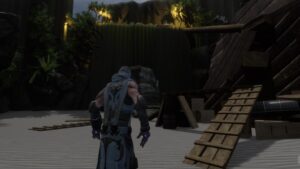
- Integrated traversal platforms into the wreck to naturally teach climbing mechanics
Focal Point
Technique & Use-case:
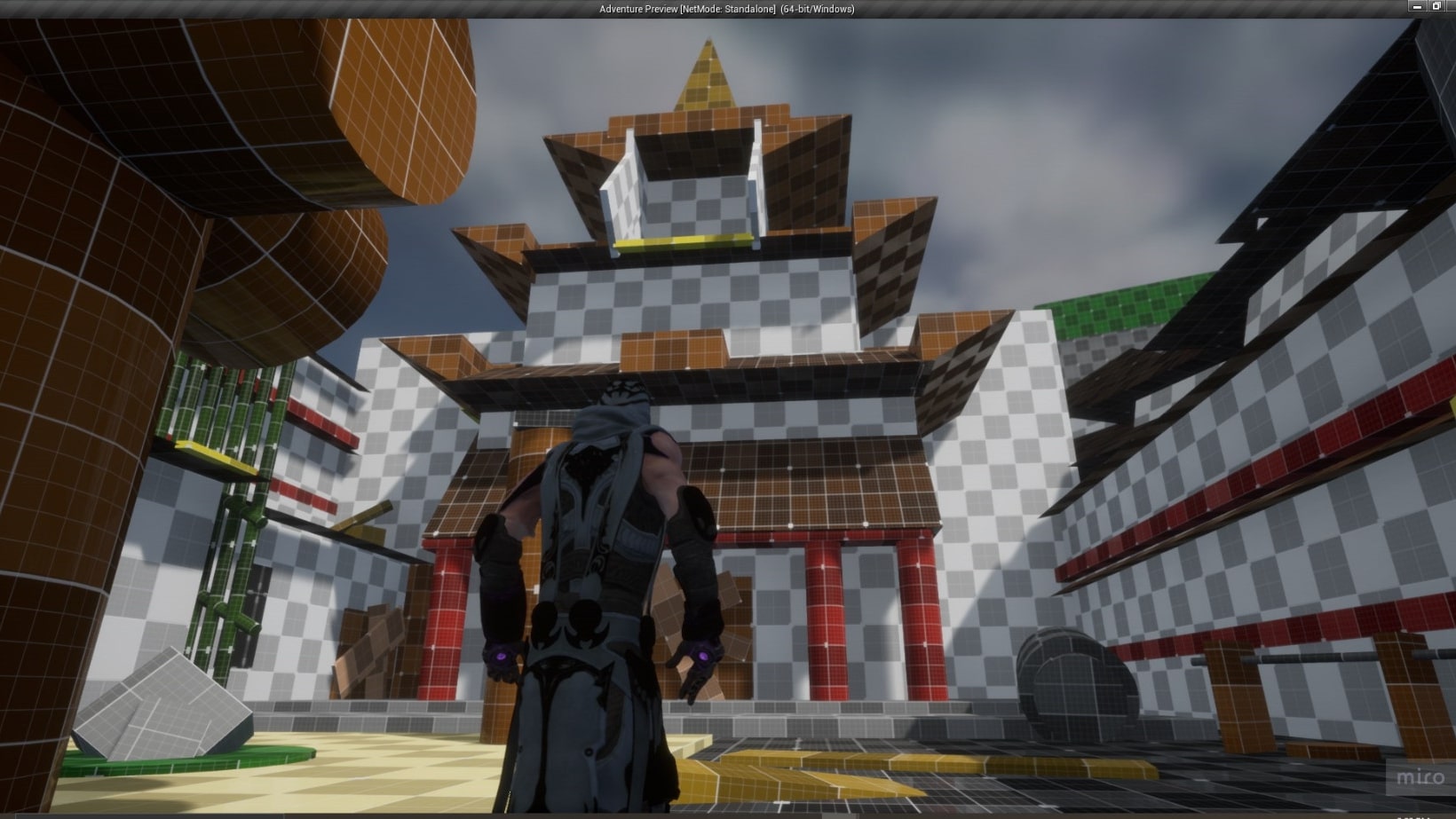
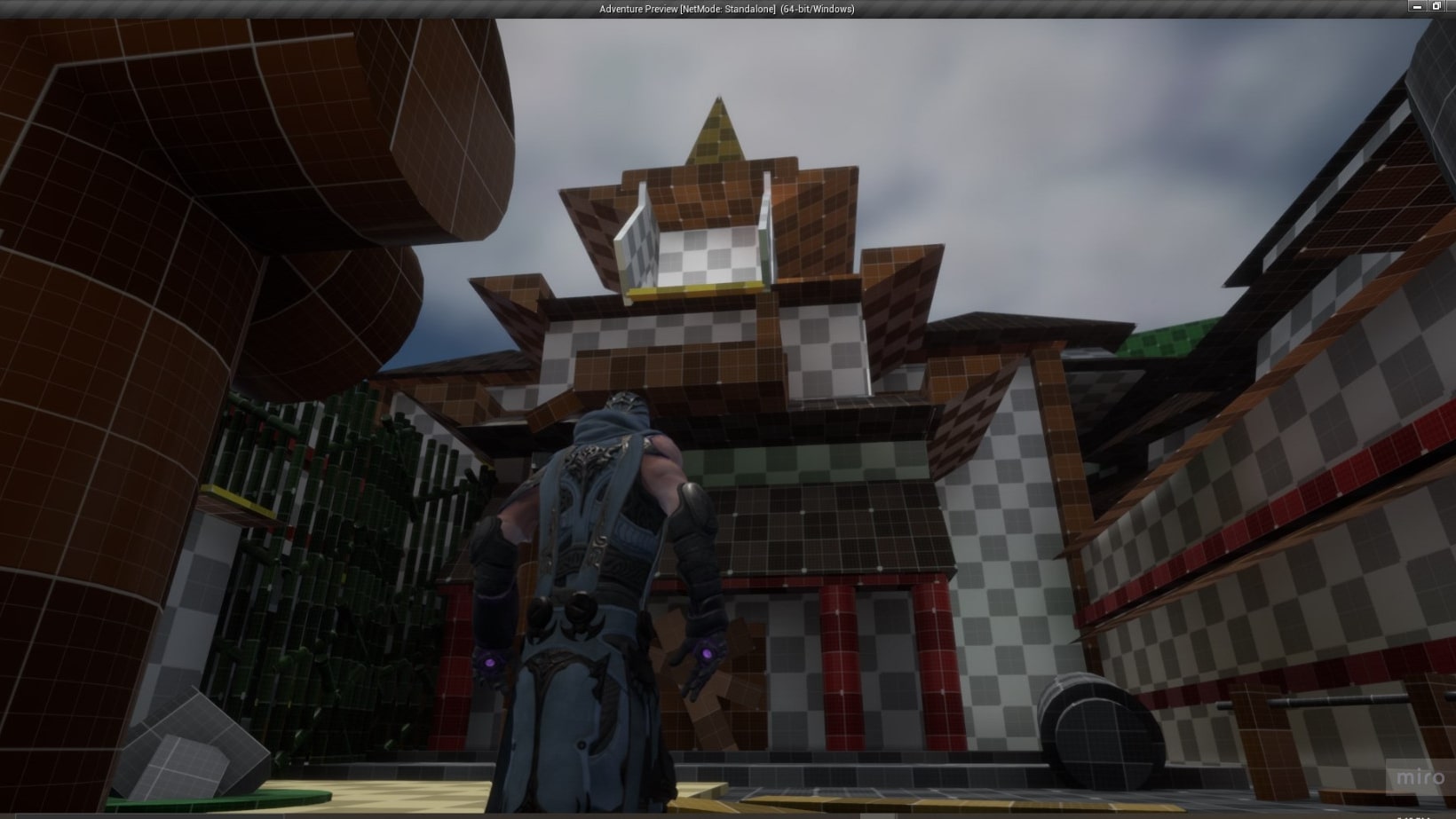
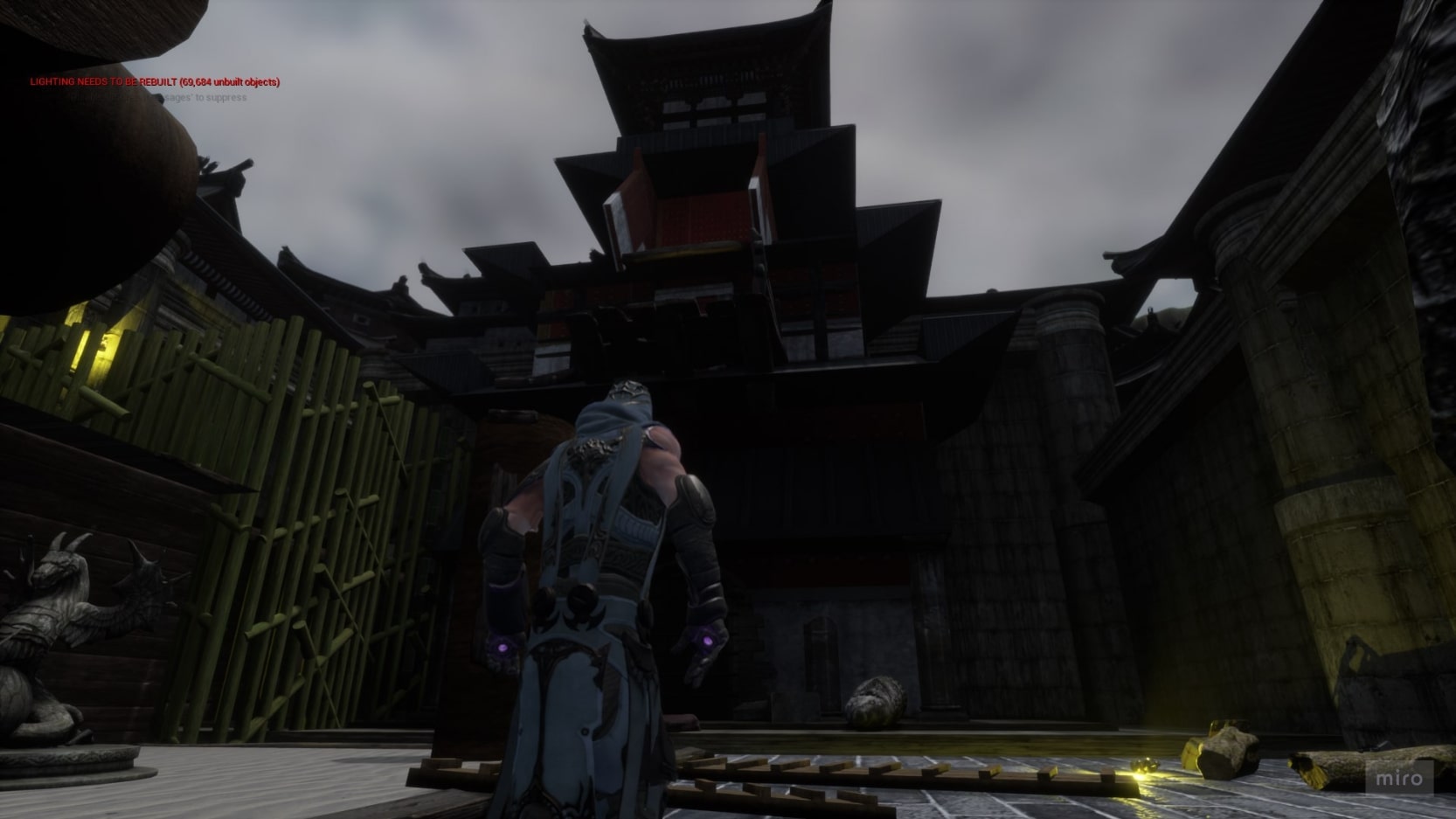
Established a grand temple as the central focal point to anchor the level’s progression and reinforce the player’s long-term objective.
Context of use-case:
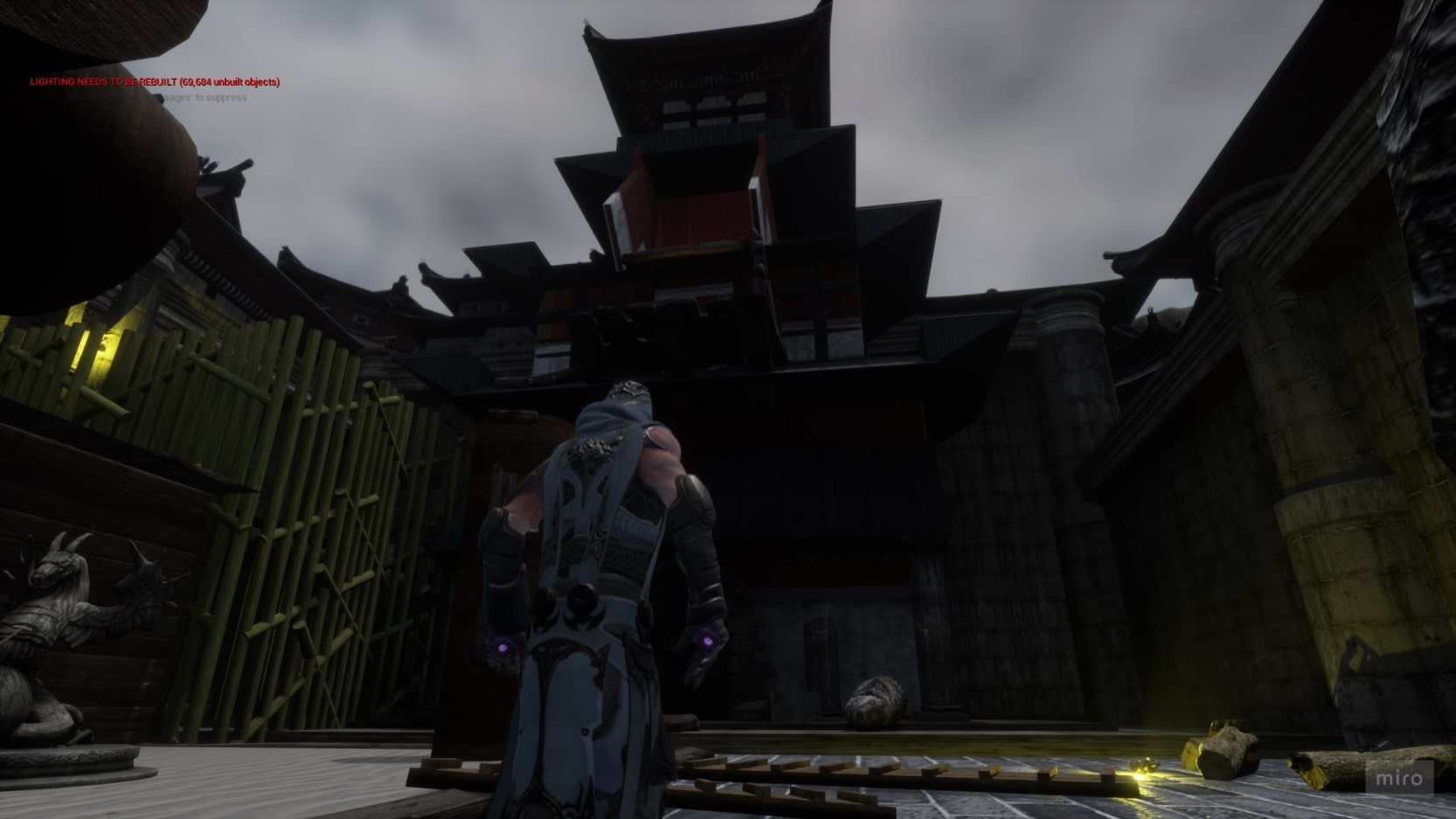
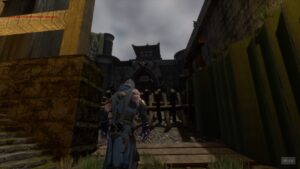
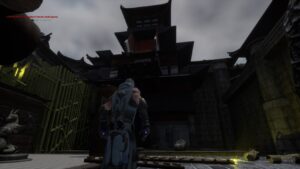
From early on, players caught glimpses of the temple and nearby structures, building anticipation. As they crossed a battlefield and entered the courtyard, the temple remained in view, ensuring the goal stayed clear. Once inside, a beam of light from a rooftop guided players to an alternate entrance, as the main gates were boarded shut.
Technique Detail:
- Temple framed as the dominant visual anchor throughout the level’s midsection
- Early glimpses reinforced anticipation and a sense of scale
- Battlefield traversal designed to keep the temple in sight as players advanced
- Courtyard light cue provided a secondary focal point, naturally directing players toward the correct path inside
Level End
Technique & Use-case:
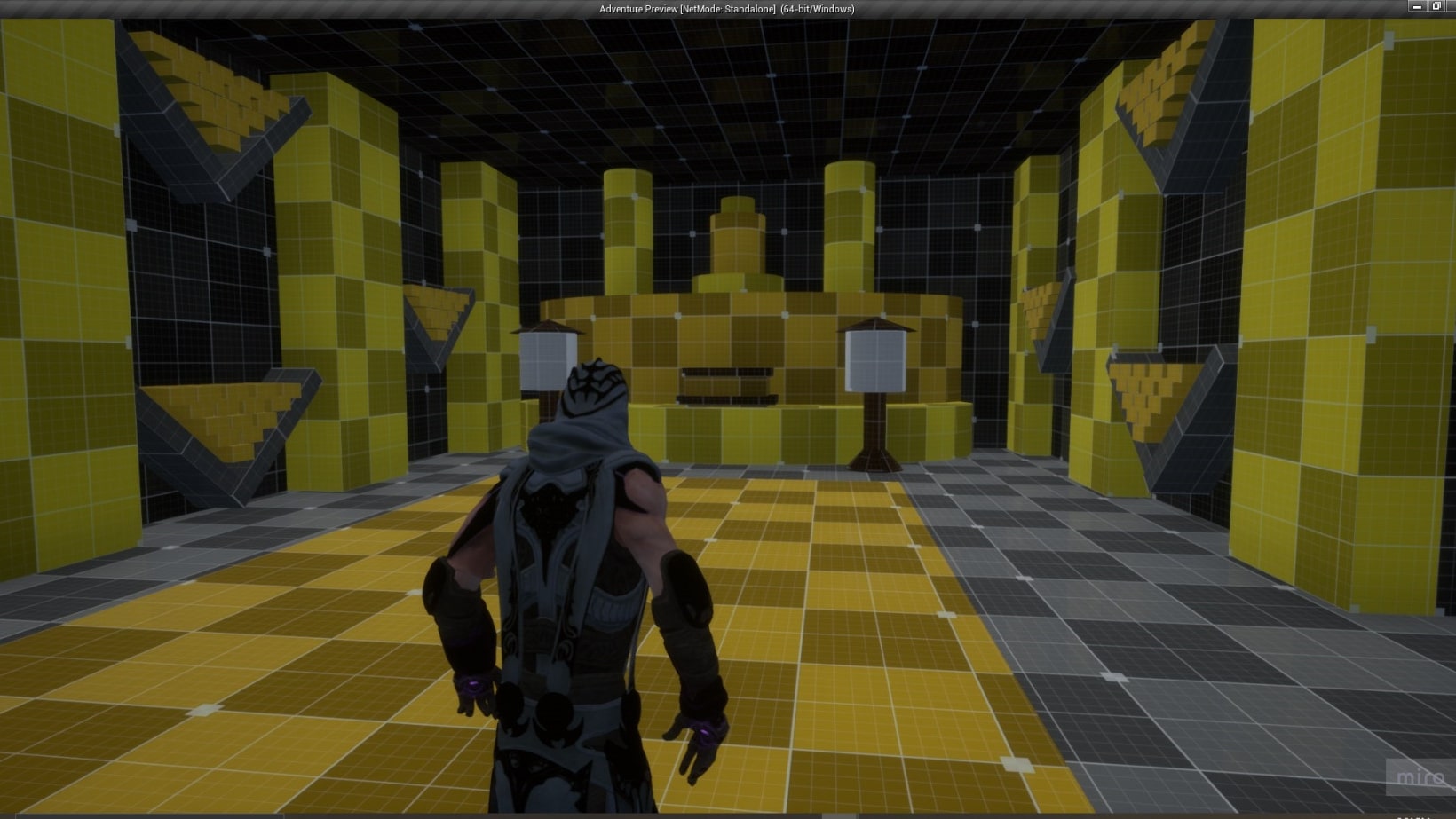
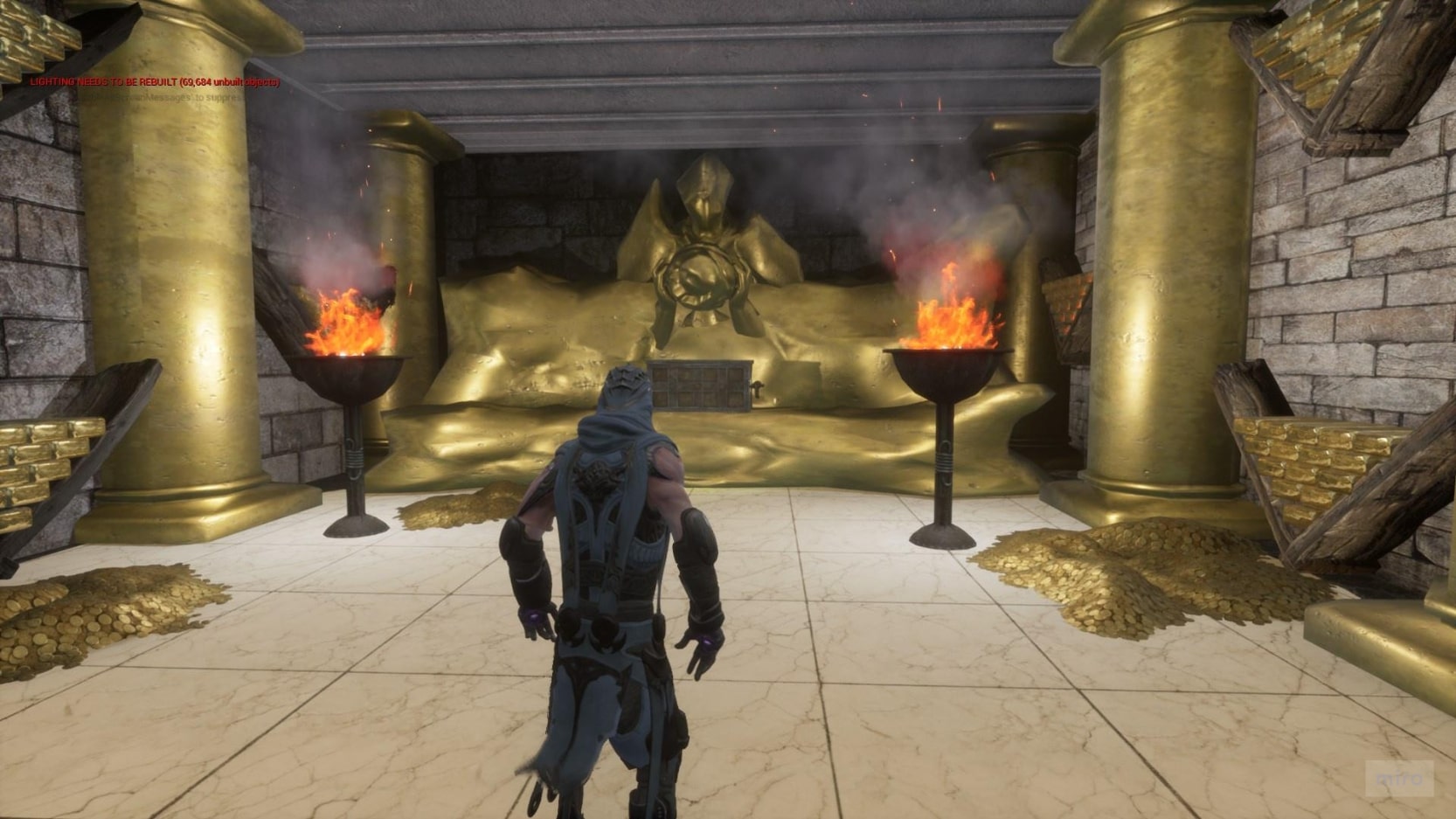
Concluded the level with a treasure chamber designed to reward the player’s journey and provide a sense of accomplishment.
Context of use-case:
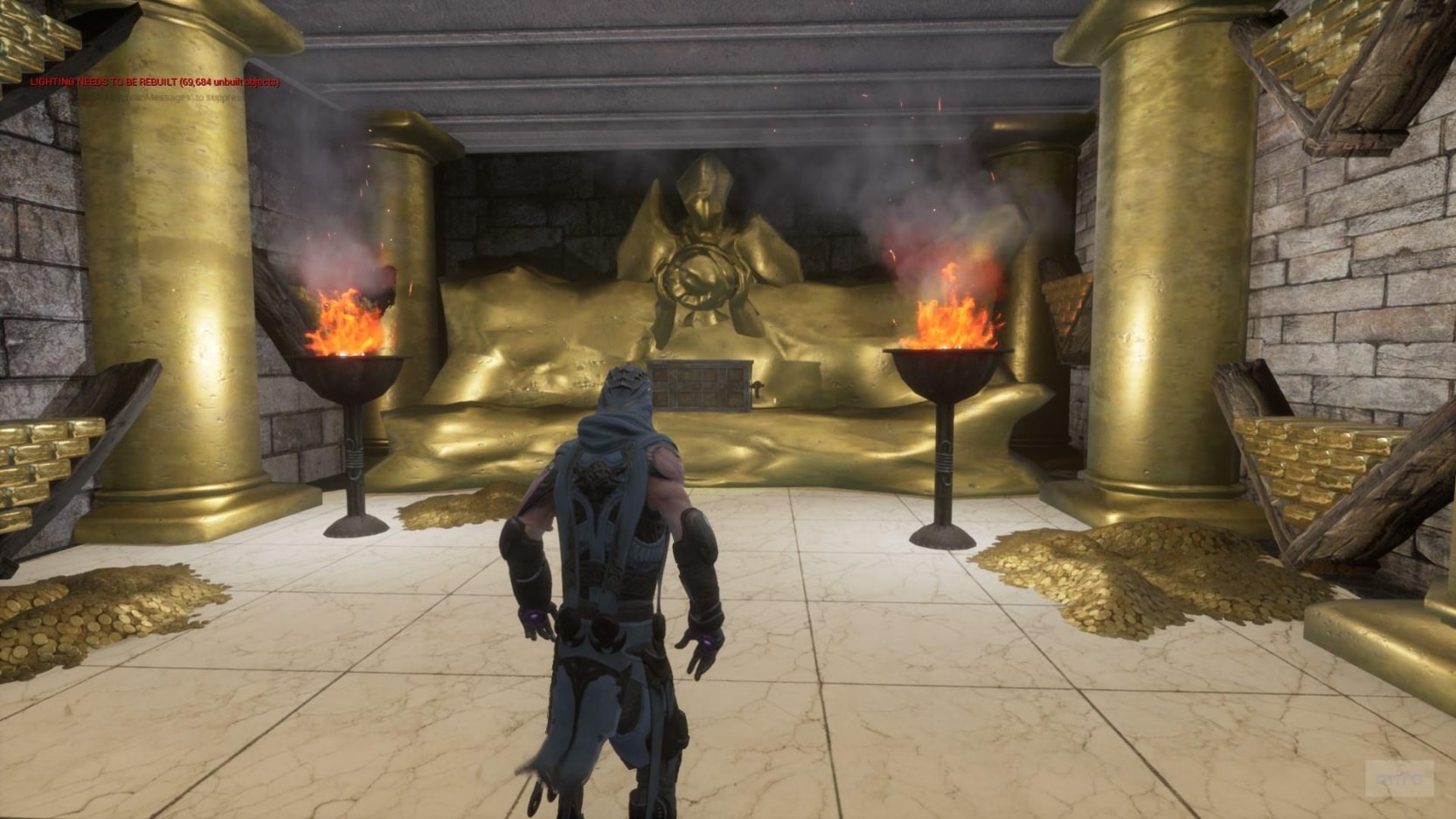
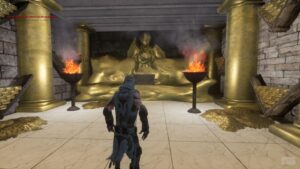
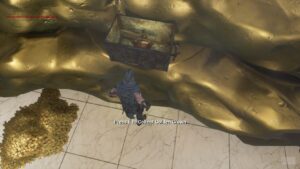
After navigating climbing challenges within the temple, players were guided by environmental breadcrumbs—lanterns, candles, and broken boards—toward a glowing entrance. Inside, the chamber contrasted the darker temple interior with bright lighting, creating a feeling of safety and reward. The treasure, highlighted by a shining crown, served as a payoff for the player’s progression, while a hidden exit provided a seamless transition into the next teammate’s level.
Technique Detail:
- Bright, glowing entrance signaling safety after darker spaces
- Environmental breadcrumbs subtly guiding players to the final chamber
- Room filled with gold centered on a crown as the ultimate reward
- Mysterious exit integrated to support team-based level transitions
Walkthrough
Beat 1: Shipwreck Beach
The player begins on a desolate beach beside the wreckage of a massive ship, with towering cliffs looming ahead and a quiet campsite behind. The shipwreck acts as a natural landmark and visual guide, leading the player toward climbable platforms and the path forward. This opening sets the tone of isolation and discovery, hinting at a larger mystery hidden inland.
Beat 2: Forest Path
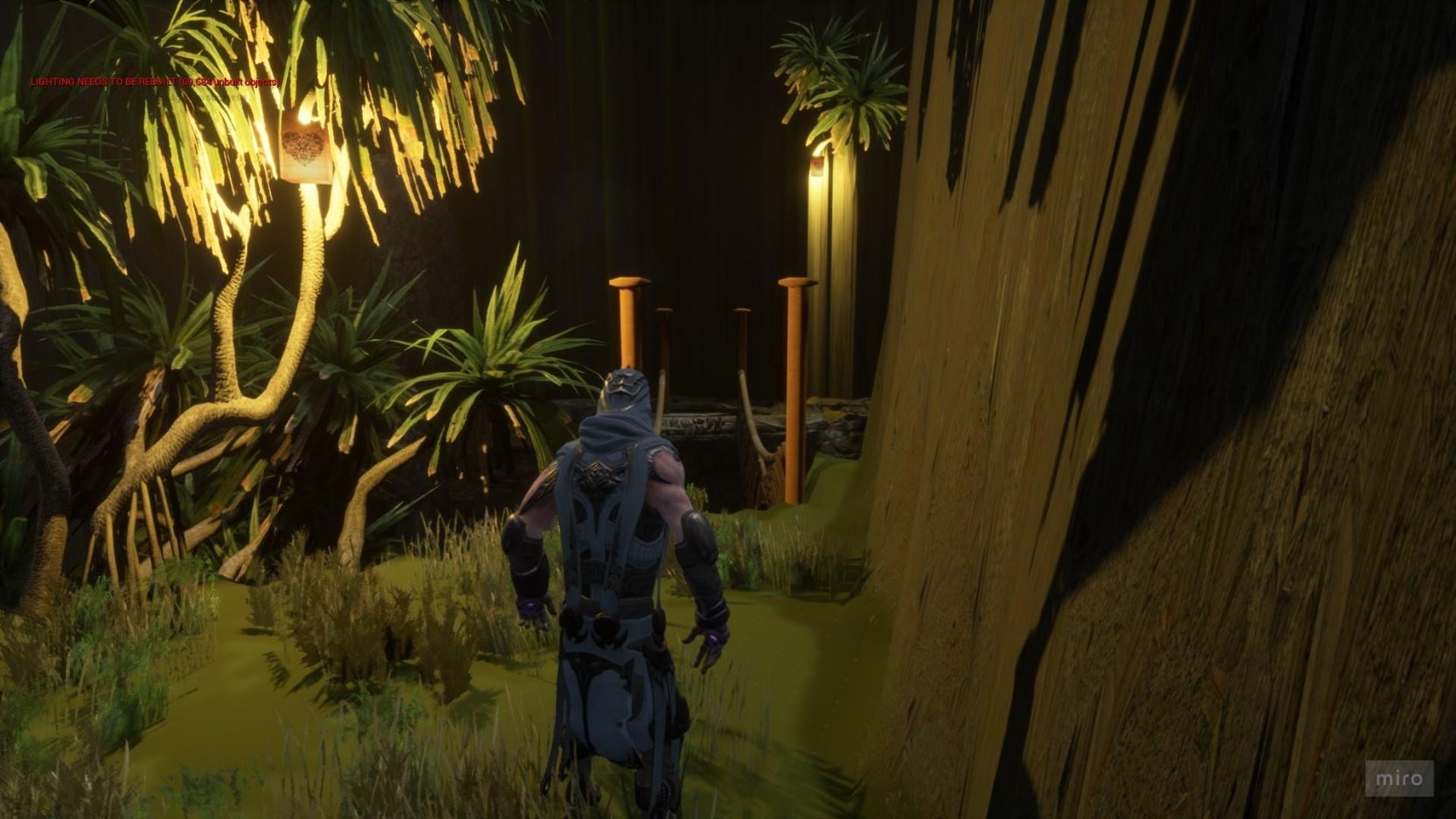
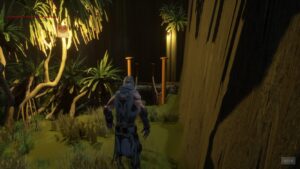
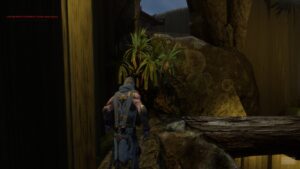
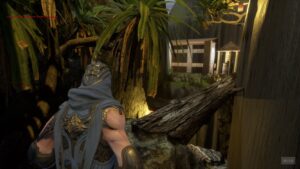
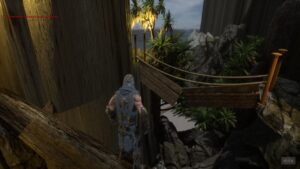
After scaling the cliff, the player follows a narrow forest path winding along the cliffside, where a broken bridge forces them deeper into the jungle. Along the way, they glimpse the ancient temple in the distance, creating anticipation and a clear goal. Navigating a fallen log bridge and crossing a ruined battlefield, the player finally reaches the temple courtyard, with its towering structure looming above as a powerful visual landmark.
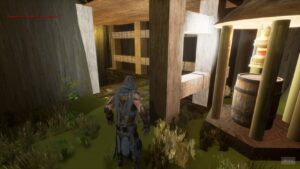
Beat 3: Temple Courtyard
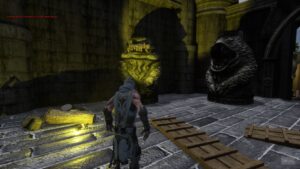
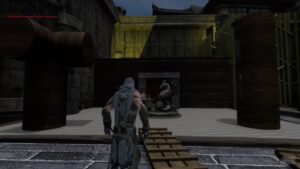
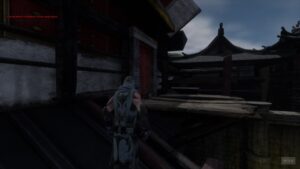
The player enters a dilapidated temple courtyard, surrounded by overgrown ruins and remnants of a forgotten siege. The main temple doors are sealed shut, but a beam of light shining from a nearby rooftop draws the player’s attention to an alternate path. Environmental clues and vertical design elements guide exploration as the player searches for a way inside.
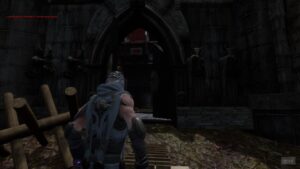
Beat 4: Throne Room
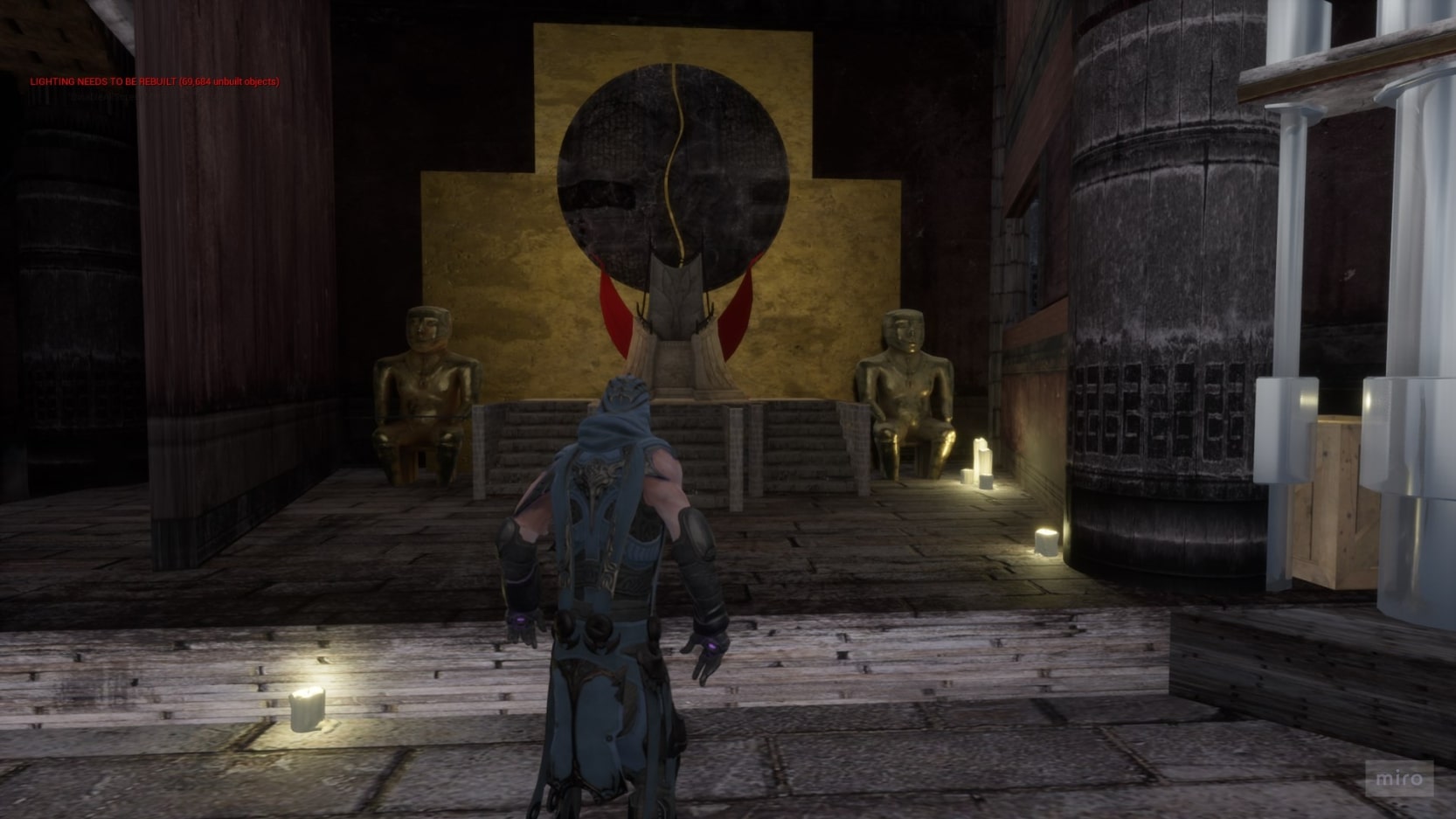
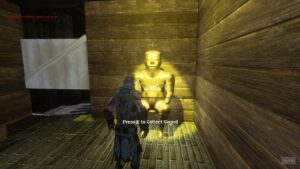
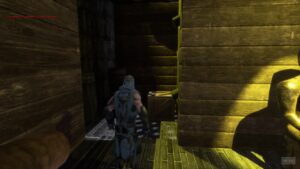
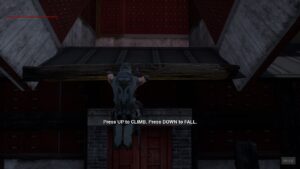
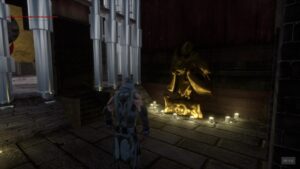
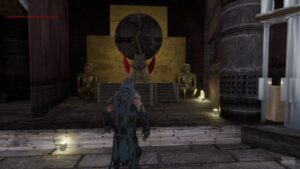
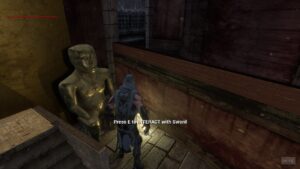
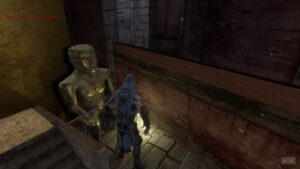
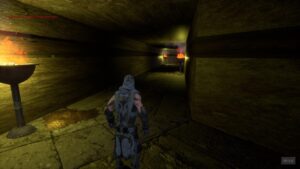
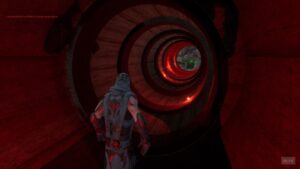
After scaling the temple and finding an alternate entrance, the player drops into a decayed throne room filled with signs of past looters and decay. They must solve a simple environmental puzzle by placing a sword onto a statue, triggering a hidden passage. Guided by candles, the player climbs through the rafters and descends a narrow stairwell deeper into the temple’s forgotten depths.
Beat 5: Underground Chamber
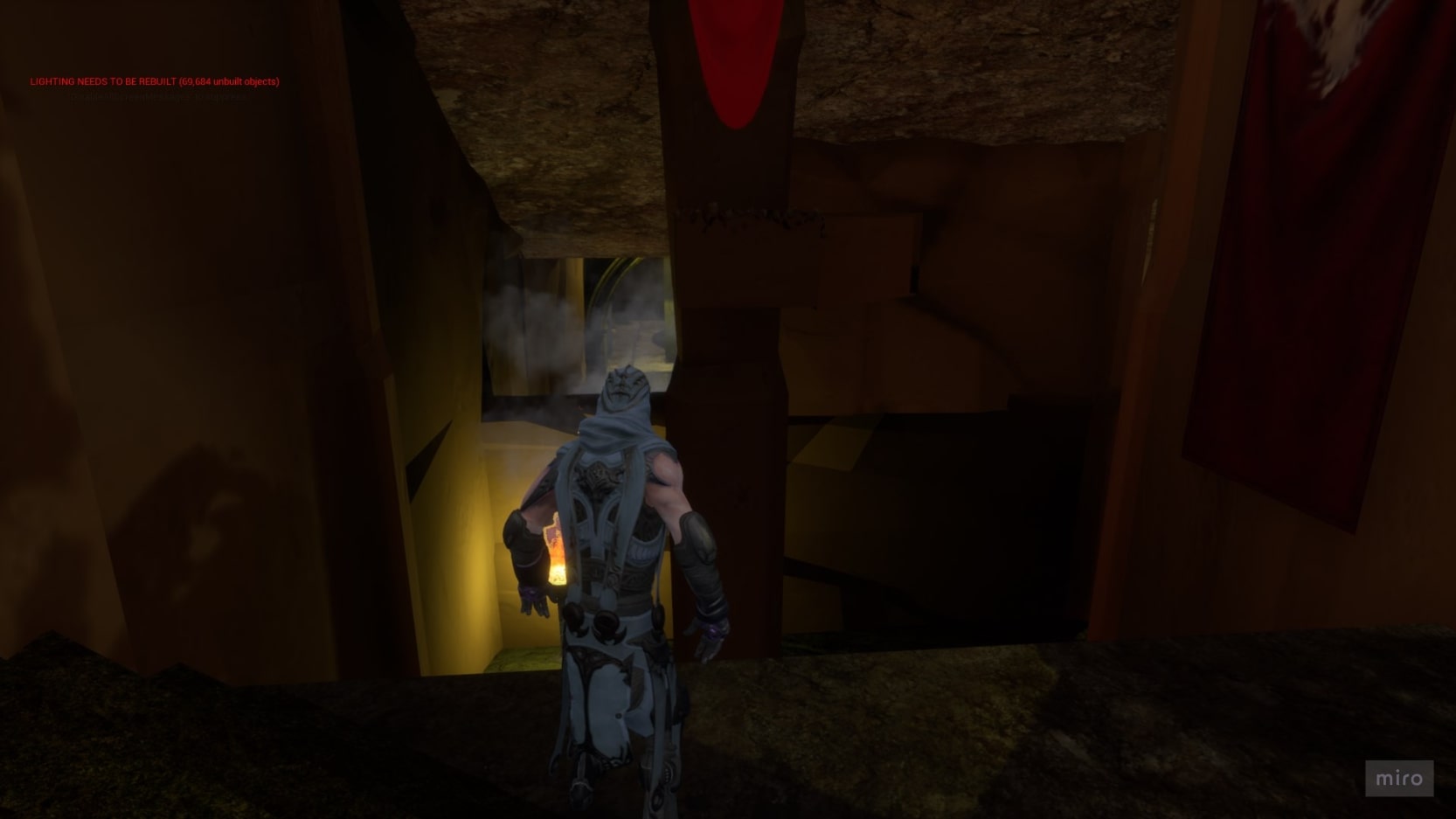
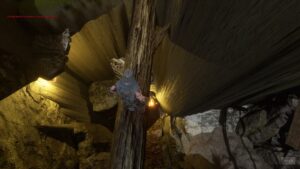
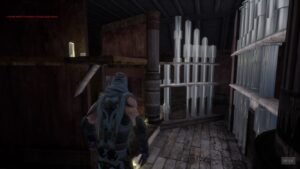
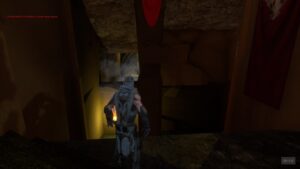
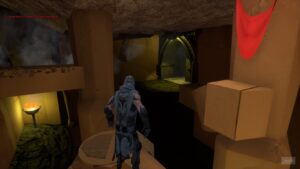
Under the throne room, the player navigates a series of traversal challenges, jumping across beams and unstable platforms while following visual breadcrumbs like candles, lanterns, and debris. This transitional space maintains momentum and guides the player toward the final treasure room.
Beat 6: Treasure Room
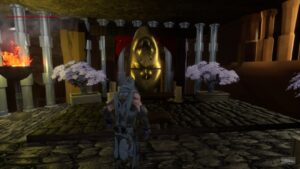
The player enters a brightly lit treasure room filled with gold, relics, and a glowing crown centerpiece, creating a clear focal point and sense of reward. The space contrasts the darker traversal section before it, using lighting and color to signal safety and completion. A subtly lit tunnel exit is placed to the side to guide players toward the next level transition.
Research, Ideation & Planning
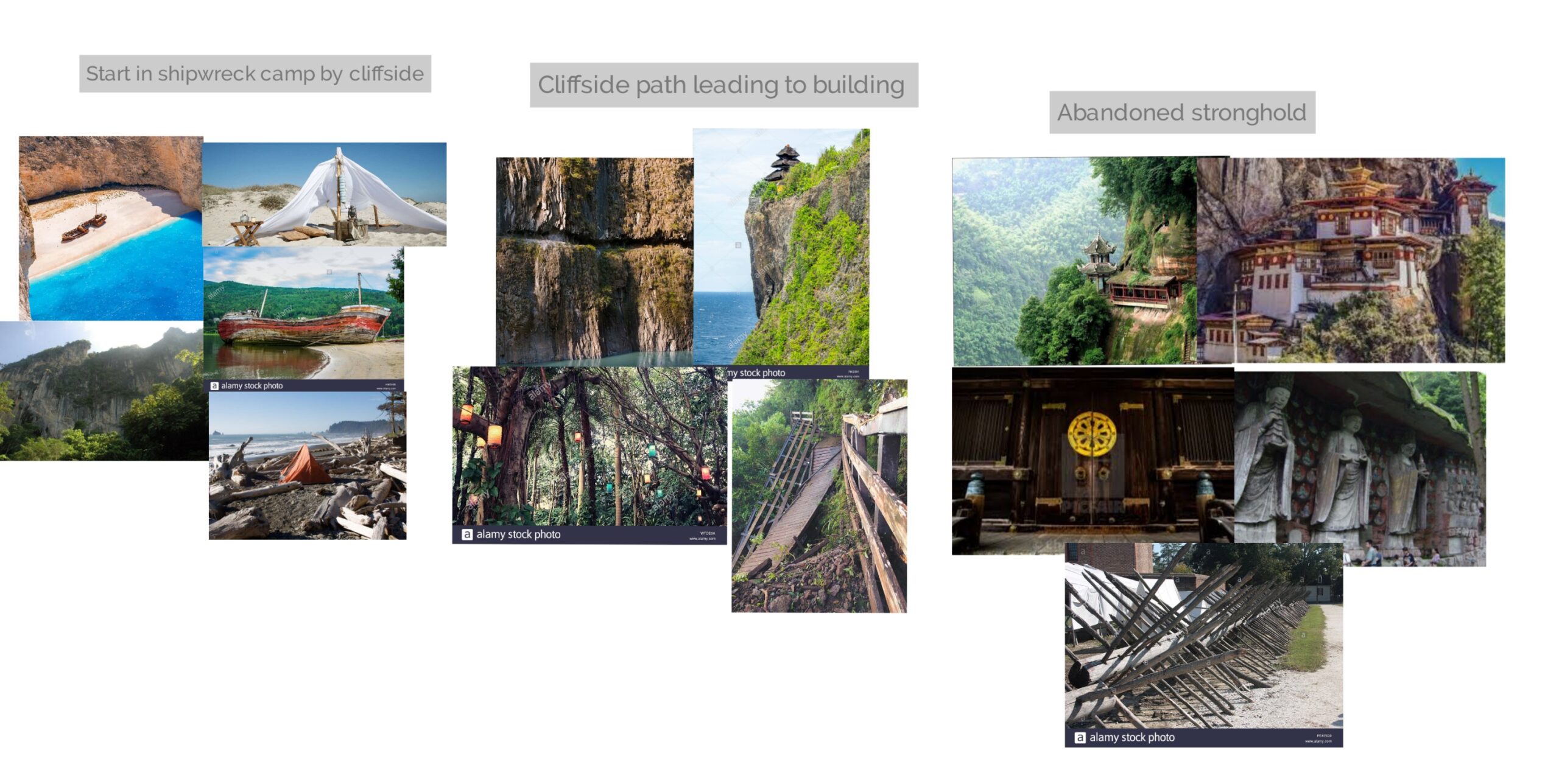
I researched multiple games, real-world references, and historical environments as sources of inspiration and context for my abandoned island level concept. This research informed the process of designing gameplay flow, environmental progression, and key focal points such as the shipwreck start, temple centerpiece, and treasure chamber finale.
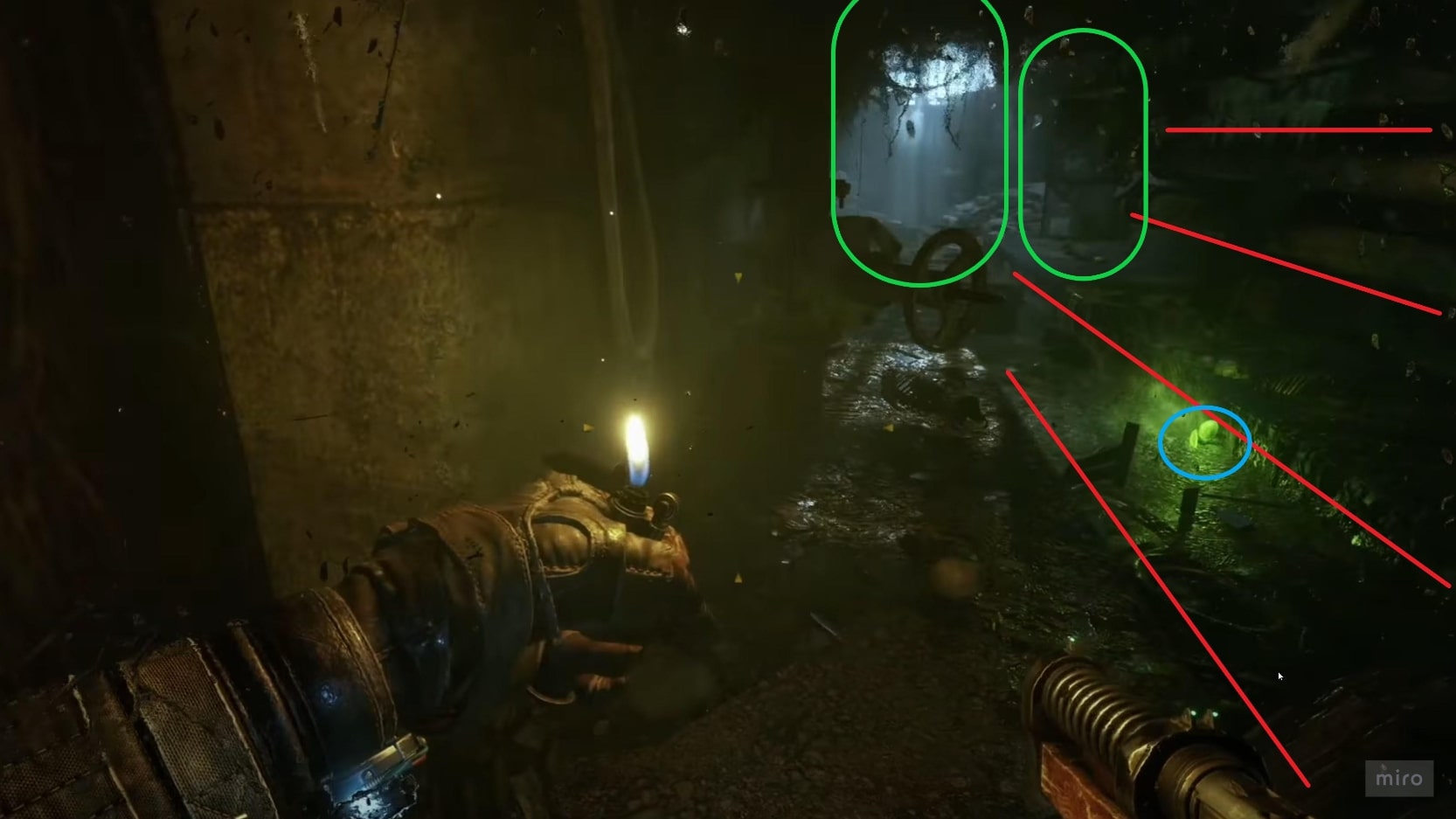
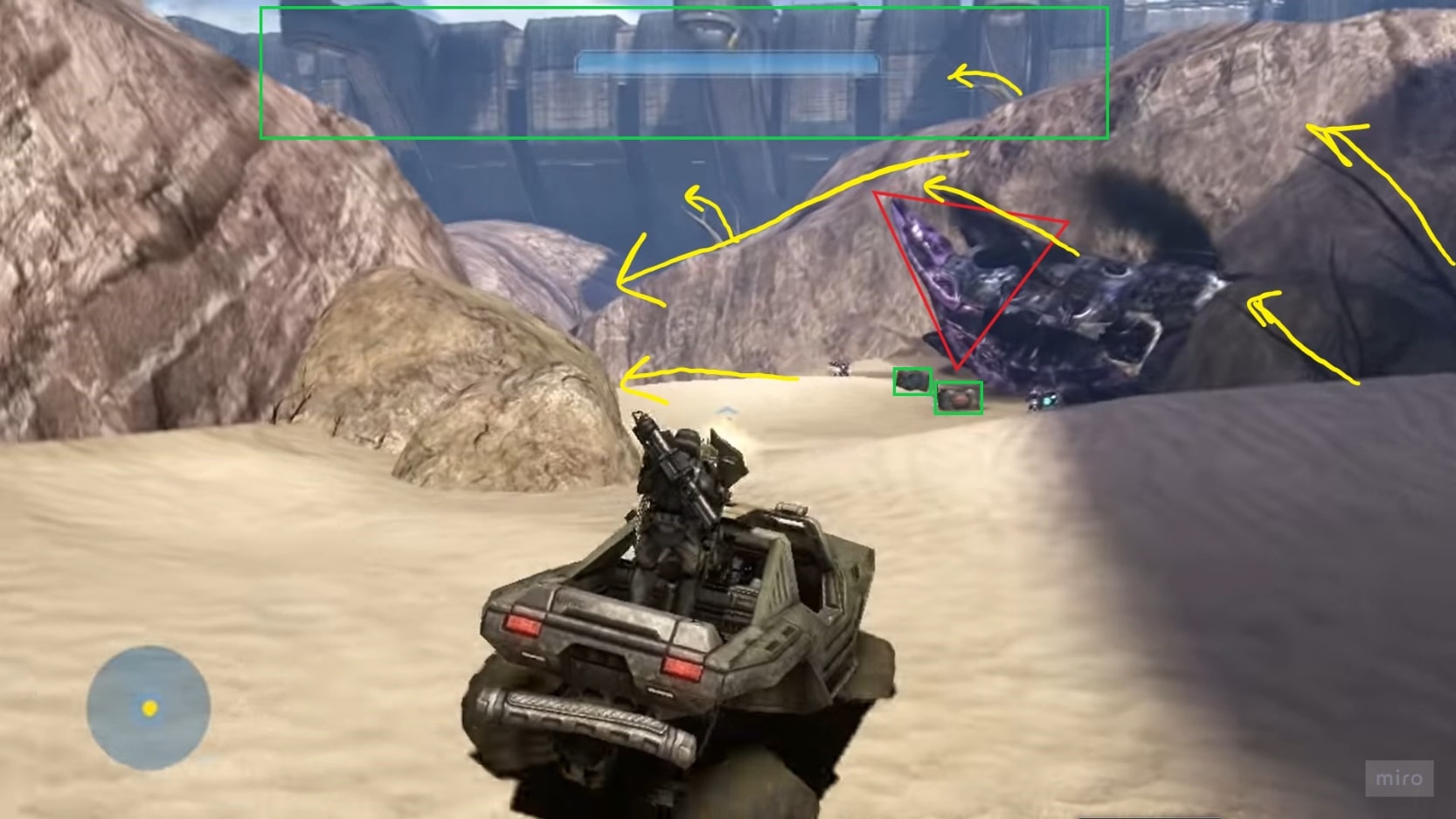
- Analyzing Games: Halo 3 and Metro Exodus were the primary games I analyzed to understand how levels guide the player through space. I studied their use of leading lines, color theory, shape theory, environmental framing, and breadcrumbing to keep players oriented while maintaining immersion.
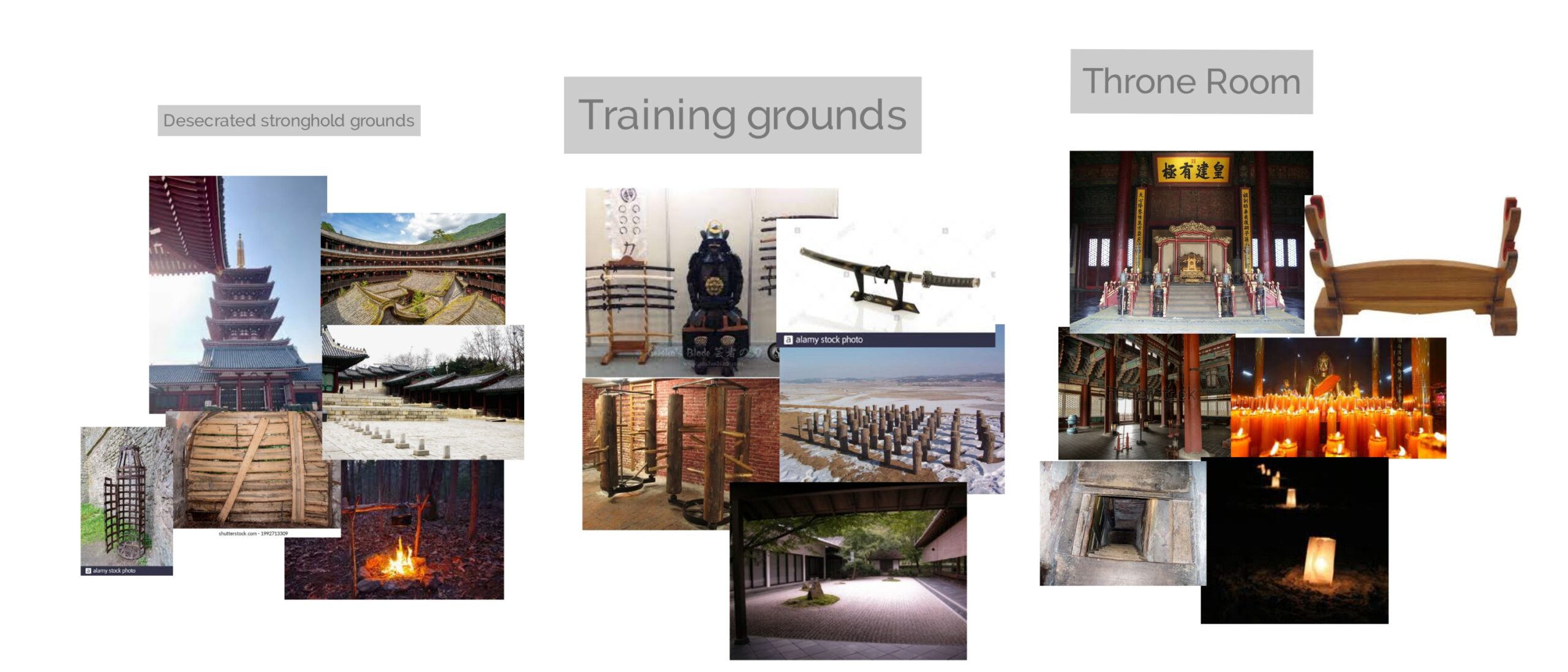
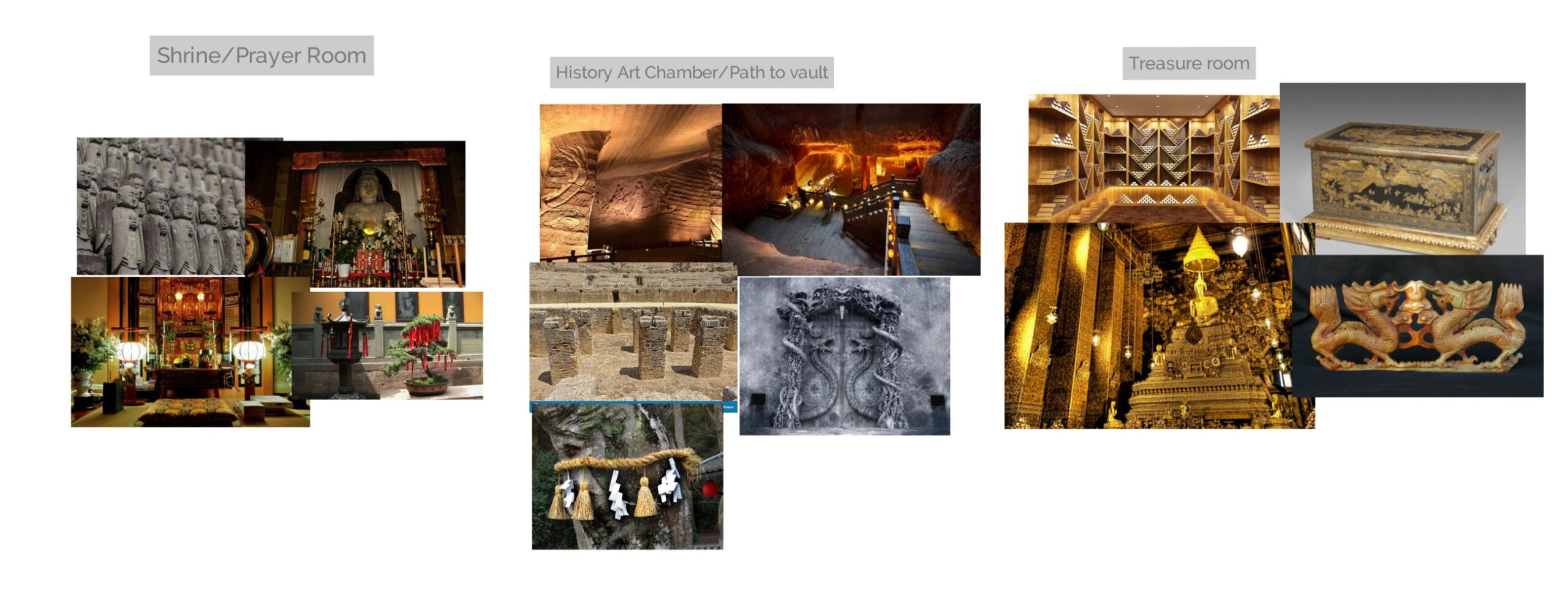
- Researching Real-World References: I drew inspiration from natural landscapes, coastal shipwrecks, ancient temples, courtyards, training grounds, treasure rooms, & more. These references helped me shape authentic environments that blended organic traversal with architectural focal points, reinforcing the theme of a forgotten island once inhabited and later reclaimed by time.
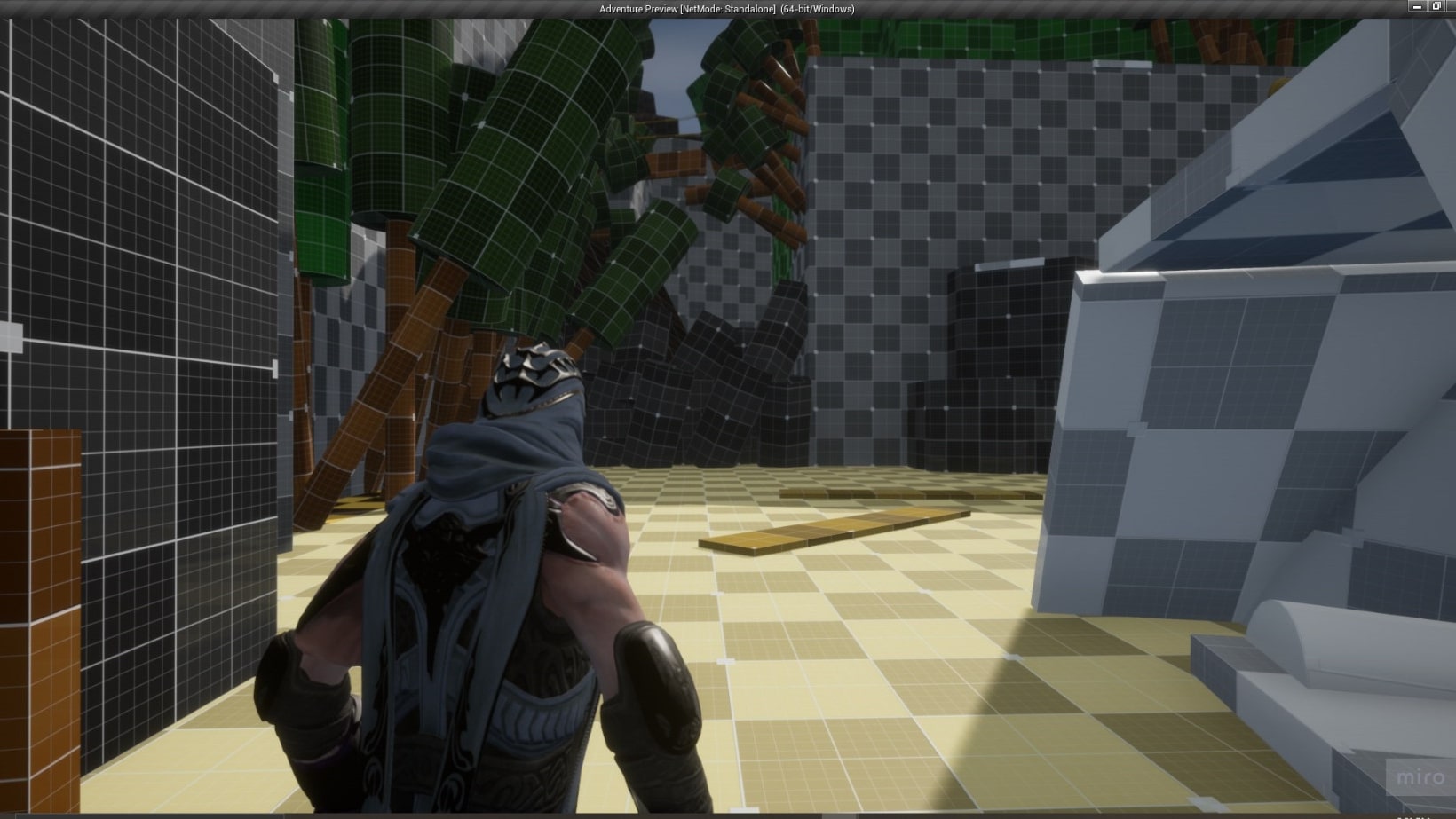
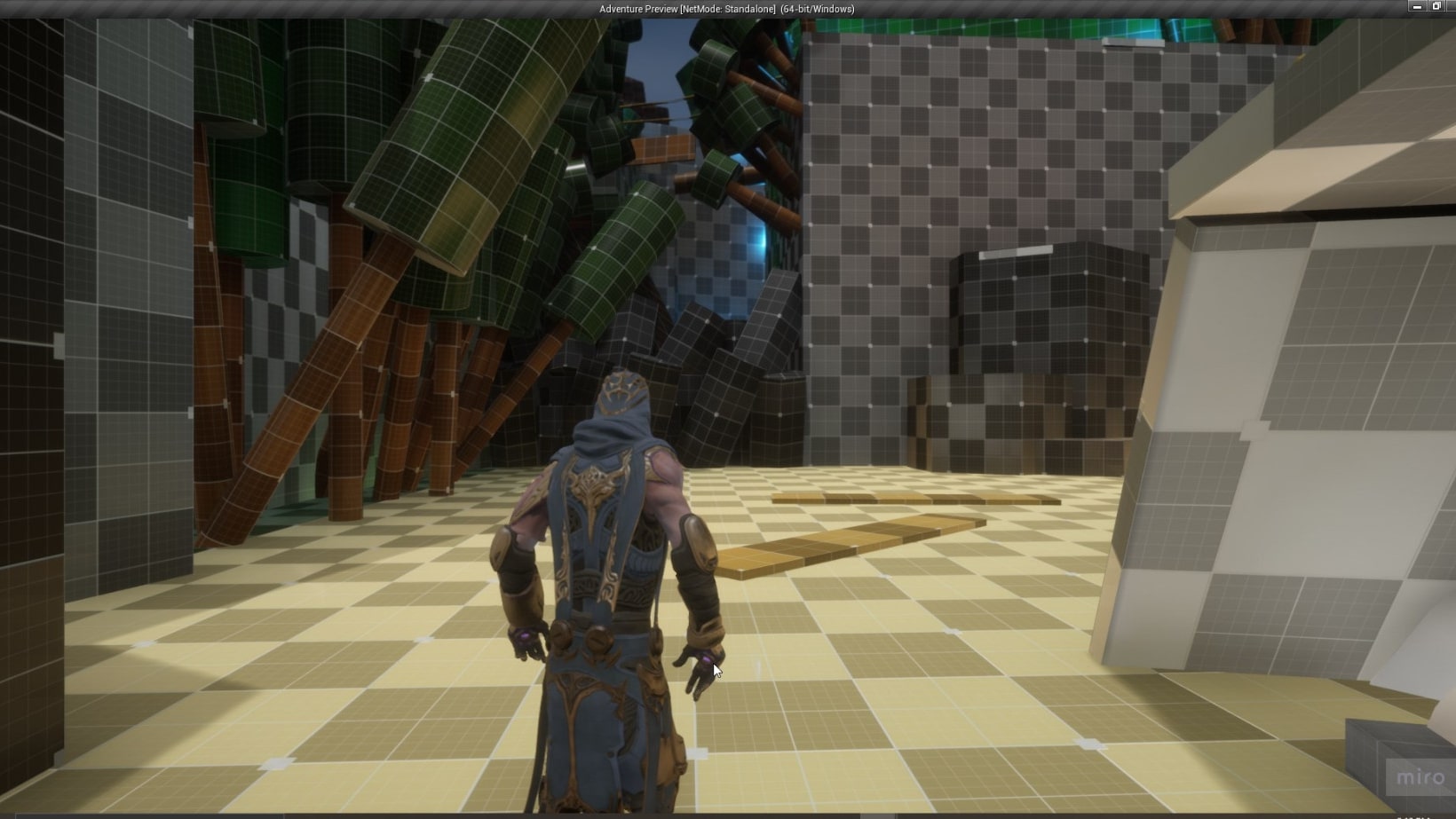
Blockout 1
Results:
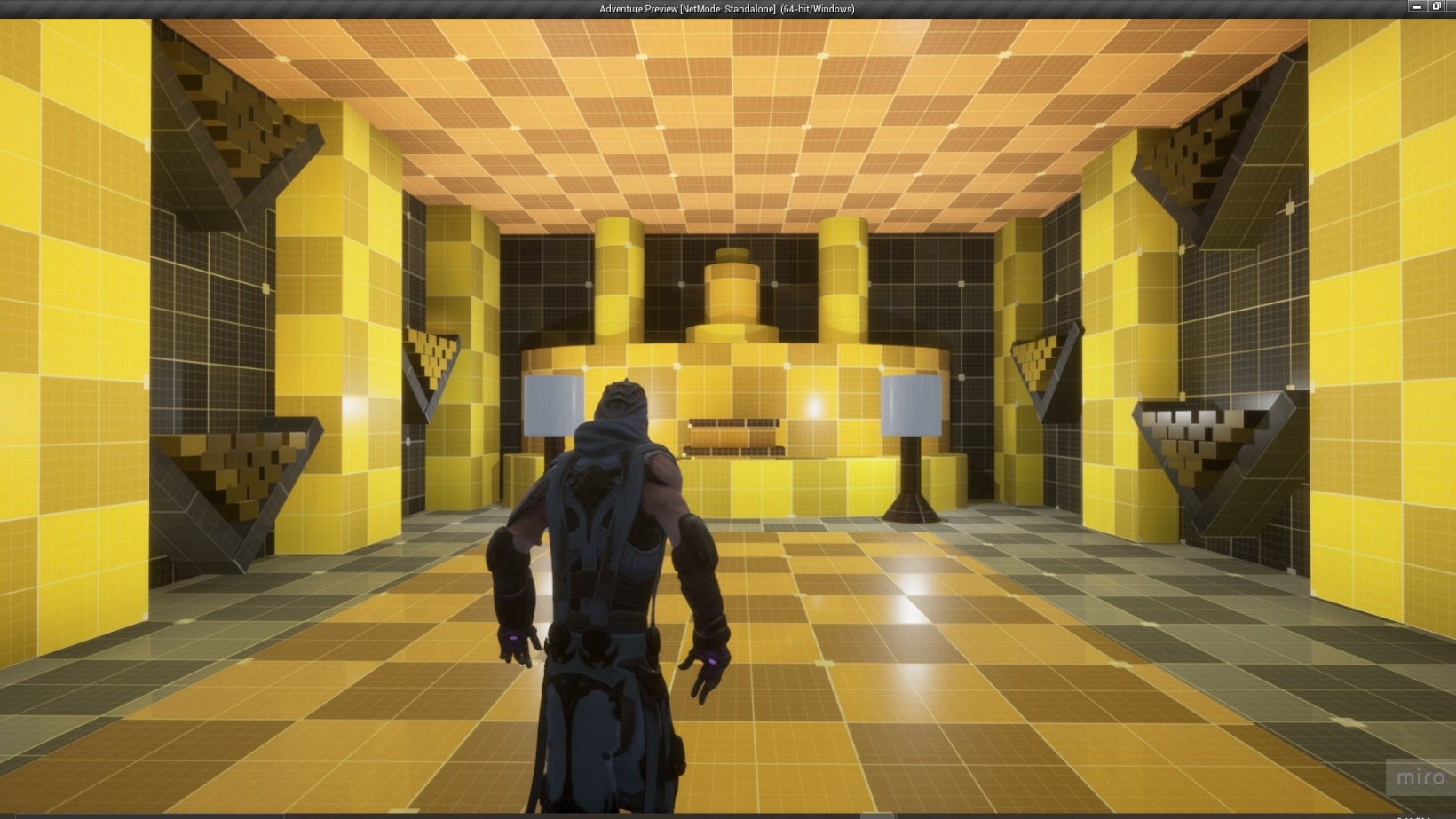
Created a clear, playable blockmesh defining major beats and traversal flow. Established a strong foundation for later visual and mechanical development.
Goal:
Use my previous research and ideation to create a 3D space that supports core traversal and guides the player from beach to temple. Ensure gameplay areas are readable without final assets.
Implementation / Execution:
- Blocked core traversal zones like cliffs, bridges, and temple entrances.
- Structured level progression: beach, cliff, jungle, battlefield, courtyard, temple.
- Used leading lines and vertical silhouettes to guide player movement.
- Added placeholder geometry for interactables to test spacing.
- Verified full level is navigable with base mechanics.
- Incorporated natural funnels and breadcrumbs with geometry alone.
Blockout 2
Results:
Improved level readability and player guidance through enhanced lighting and visual cues. Strengthened flow with clearer breadcrumbs and leading lines.
Goal:
Refine the blockmesh to better support player navigation and highlight key gameplay beats using improved lighting and geometry-based guidance.
Implementation / Execution:
- Applied improved lighting to create contrast and focus areas.
- Enhanced leading lines using geometry and level layout adjustments.
- Placed breadcrumbs like broken boards and lanterns to guide players.
- Improved sightlines toward landmarks and objectives.
- Refined pathways to reinforce intended progression.
- Balanced open and funnel spaces for pacing.
Final Iteration
Results:
Successfully integrated final assets and materials, enhancing visual fidelity and immersion. Merged the level seamlessly with teammates’ sections, creating a cohesive gameplay experience.
Goal:
Replace blockmesh with polished assets, refine transitions, and ensure smooth level flow between team members’ areas.
Implementation / Execution:
- Imported and replaced blockmesh with final environment assets.
- Fixed material and asset import issues to maintain consistency.
- Adjusted level start and end sections for smooth transitions.
- Added checkpoints and transition triggers for team continuity.
- Collaborated on version control using Perforce.
- Polished lighting and environmental details for final presentation.